
Project20x vs SVG to 3D
Side-by-side comparison to help you choose the right AI tool.

Project20x
Project20x delivers AI governance solutions to ensure compliance and effectiveness for contemporary policy needs.
Last updated: March 4, 2026
SVG to 3D
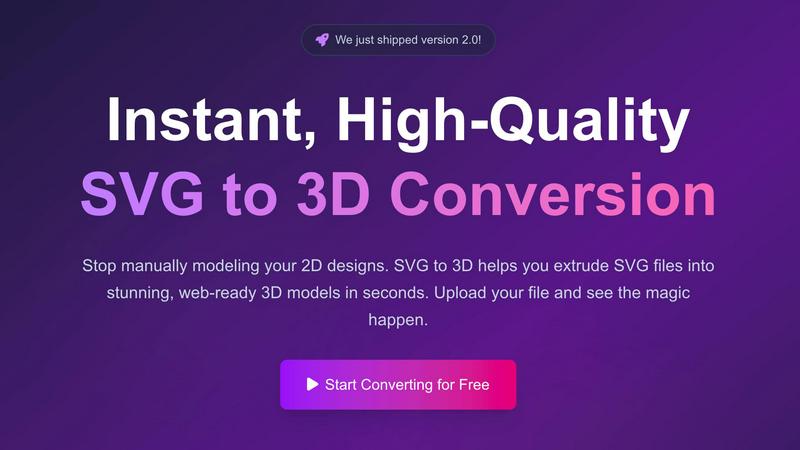
Easily convert SVG files into stunning web-ready 3D models with advanced controls and lightning-fast processing.
Last updated: February 26, 2026
Visual Comparison
Project20x
SVG to 3D
Feature Comparison
Project20x
Governance Layer
The Governance Layer employs a comprehensive ten-step AI methodology that aids lawmakers in refining policy documents. This feature ensures clarity, identifies potential conflicts, and enhances the overall quality of legislative texts, promoting sound policy creation.
Management Layer
Through the Management Layer, Project20x implements "Rules as Code," converting approved policies into executable code. This automated transformation streamlines workflow processes, reduces administrative burdens, and enhances operational efficiency across government agencies.
Interface Layer
The Interface Layer of Project20x provides citizens with round-the-clock access to AI agents trained on codified policies. This feature simplifies public service interactions, allowing citizens to obtain information and assistance quickly and conveniently, improving overall user experience.
Transparency and Accountability
Project20x is committed to ensuring transparency and accountability in governmental operations. By making all activities traceable and quantifiable, this feature allows stakeholders to monitor compliance and performance, fostering trust between the government and its citizens.
SVG to 3D
One-Click to GLB for the Web
With just a single click, users can convert their SVG files into web-optimized GLB files. This feature is tailored for web developers, making it easy to integrate 3D models into projects using frameworks like Three.js or React Three Fiber, enhancing user experience and visual appeal.
3D-Print Ready with STL Export
SVG to 3D supports seamless STL exports, making it ideal for 3D printing applications. Users can create clean and ready-to-print models suitable for immediate use with their slicer software, eliminating the need for complex CAD applications.
Real-Time Browser-Based Modeling
This tool allows users to go beyond basic extrusion. Fine-tune details such as thickness, bevels, and apply PBR materials, all while enjoying a real-time 3D preview. This interactive approach empowers users to create professional-quality models effortlessly.
Advanced Material System
SVG to 3D features an advanced material system that allows users to apply realistic PBR materials and custom textures. This capability ensures that your 3D models have depth and realism, setting them apart from those created with basic tools.
Use Cases
Project20x
Legislative Support
Project20x can be utilized by lawmakers to draft and refine legislative texts efficiently. By leveraging the Governance Layer, they can ensure their policies are clear, coherent, and conflict-free, leading to better governance.
Public Service Automation
Government agencies can implement Project20x to automate various public service processes. By utilizing the Management Layer, they can create streamlined workflows, reducing wait times and improving service delivery to citizens.
Citizen Engagement
Citizens can interact with government services through the Interface Layer of Project20x, accessing information and support from AI agents. This enhances citizen engagement by providing a user-friendly platform for inquiries and assistance, fostering a more informed public.
Compliance Monitoring
Project20x enables government entities to monitor compliance with policies effectively. The transparency and accountability feature allows for tracking and auditing of governmental activities, ensuring adherence to regulations and enhancing public trust.
SVG to 3D
Create Interactive 3D Logos and Icons
Developers can easily convert SVG logos and icons into 3D models, enhancing their websites with interactive elements. This capability allows for a richer user experience and greater engagement with visitors.
Transform Designs for 3D Printing
Graphic designers can take their 2D artwork and turn it into tangible 3D objects. Whether it's logos, art pieces, or custom parts, SVG to STL conversion simplifies the process for 3D printing, making physical fabrication straightforward.
Mock Up UI/UX Designs
Designers can elevate their presentations by quickly converting SVG elements into 3D models. This feature allows them to create mock-ups with depth and realism, impressing clients and stakeholders during design reviews.
Rapid Prototyping for Developers
Developers can utilize SVG to 3D for rapid prototyping of 3D assets. By converting SVG files quickly, they can iterate on designs faster and incorporate 3D elements into their applications without extensive modeling work.
Overview
About Project20x
Project20x is a cutting-edge AI-driven platform aimed at transforming governmental operations by simplifying complex regulatory frameworks into accessible digital processes. Designed specifically for government agencies, lawmakers, and citizens, Project20x serves as a bridge between policy creation and public engagement. The platform operates through three key layers: the Governance Layer, the Management Layer, and the Interface Layer. The Governance Layer utilizes a ten-step AI methodology to assist lawmakers in crafting effective policies by analyzing legislative texts for clarity and identifying potential conflicts. In the Management Layer, these approved policies are translated into functional code through "Rules as Code," creating automated workflows that enhance efficiency. The Interface Layer ensures that citizens have 24/7 access to AI agents trained on these policies, facilitating seamless interactions with public services. With a focus on transparency, accountability, and security, Project20x guarantees that all governmental activities are traceable, quantifiable, and subject to thorough human oversight, ultimately fostering a more engaged and informed citizenry.
About SVG to 3D
SVG to 3D is a powerful online tool designed to transform 2D SVG vector graphics into high-quality 3D models in just a few clicks. It caters to a diverse audience, including web developers, graphic designers, and 3D printing enthusiasts, by providing an efficient solution for converting flat designs into dynamic, three-dimensional representations. Unlike heavyweight software like Blender or Cinema 4D, SVG to 3D streamlines the conversion process, allowing users to achieve stunning results without the steep learning curve. The tool's main value proposition lies in its speed and ease of use, enabling users to focus on creativity rather than complex modeling techniques. With SVG to 3D, you can enhance your web projects, create interactive designs, and prepare files for 3D printing with minimal effort.
Frequently Asked Questions
Project20x FAQ
What types of government entities can benefit from Project20x?
Project20x is designed for a wide range of government entities including federal and state agencies, lawmakers, and local governments, enabling them to enhance their operations and engagement efforts.
How does Project20x ensure data security?
Project20x incorporates robust security measures and protocols to protect sensitive data. All activities are traceable, and interactions are subject to rigorous human oversight, ensuring compliance with privacy regulations.
Can citizens access Project20x directly?
Yes, citizens can access Project20x through the Interface Layer. They can interact with AI agents trained on codified policies, providing them with 24/7 access to information and support related to public services.
What makes Project20x different from other governmental platforms?
Project20x stands out due to its AI-driven approach that integrates three distinct layers: Governance, Management, and Interface. This holistic framework not only streamlines policy creation and management but also enhances citizen engagement and transparency.
SVG to 3D FAQ
How does SVG to 3D work?
SVG to 3D works by allowing users to upload their SVG files, which are then processed by the tool to generate a 3D model. Users can adjust various settings and see real-time previews before exporting.
What file formats can I export to?
Users can export their 3D models in multiple formats, including GLB, GLTF, OBJ, and STL. This versatility ensures that the models can be used in various applications, from web projects to 3D printing.
Is my data secure while using SVG to 3D?
Yes, SVG to 3D prioritizes user privacy and security. Files are processed locally within the browser when possible, ensuring that designs remain secure and are not uploaded to external servers.
Do I need to install any software to use SVG to 3D?
No, SVG to 3D is a web-based application that requires no software installation. Users can access the tool directly through their browser, making it convenient and easy to use from anywhere.
Alternatives
Project20x Alternatives
Project20x is an advanced AI-driven platform designed to enhance governmental operations through effective governance solutions. It facilitates the translation of complex regulatory frameworks into user-friendly digital processes, making it ideal for government agencies, lawmakers, and citizens. Users often seek alternatives to Project20x due to factors such as pricing, specific features, or the need for compatibility with existing platforms. When considering alternatives, it's essential to assess the core functionalities, user experience, customer support, and overall value offered to ensure alignment with your unique requirements.
SVG to 3D Alternatives
SVG to 3D is a specialized tool designed to convert 2D SVG vector graphics into high-quality 3D models. It falls under the category of AI Assistants, catering to developers, designers, and 3D printing enthusiasts looking for a quick and efficient way to bring their designs to life. Users often seek alternatives to SVG to 3D due to factors like pricing, specific feature requirements, or compatibility with different platforms. When choosing an alternative, it is essential to consider the ease of use, the quality of the output, and the range of features offered. Look for tools that streamline the conversion process and support various file formats, ensuring they meet your specific project needs.