
HookMesh vs Hostim.dev
Side-by-side comparison to help you choose the right AI tool.

Effortlessly enhance your SaaS with reliable webhooks, automatic retries, and a self-service customer portal.
Last updated: February 26, 2026

Hostim.dev
Hostim.dev deploys Docker apps with built-in databases on simple EU infrastructure.
Last updated: March 1, 2026
Visual Comparison
HookMesh
Hostim.dev
Feature Comparison
HookMesh
Reliable Delivery
HookMesh guarantees that webhooks are never lost. The platform utilizes automatic retries with exponential backoff and jitter, allowing for retries over a 48-hour period. This ensures that even if a customer endpoint fails temporarily, the webhook will be delivered once the issue is resolved.
Circuit Breaker
This feature automatically disables failing endpoints when they do not respond correctly. By preventing a slow or unresponsive endpoint from backing up the entire queue, HookMesh enhances overall system performance. Once the endpoint recovers, it can be re-enabled seamlessly.
Customer Portal
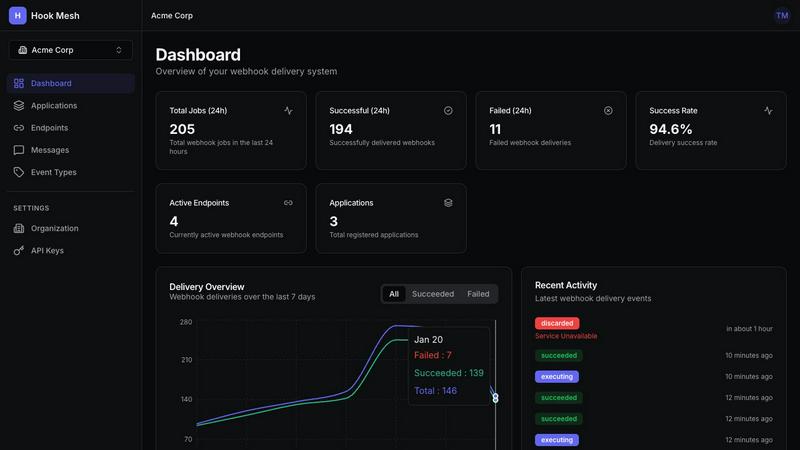
HookMesh provides a self-service portal for customers to manage their endpoints effectively. This embeddable UI allows users to add endpoints, monitor delivery logs for full request/response visibility, and even replay failed webhooks instantly, enhancing user experience and reducing support requests.
Developer Experience
The platform is designed to enable developers to ship webhooks in just minutes. With a REST API and SDKs available for JavaScript, Python, and Go, HookMesh simplifies the integration process, allowing teams to send webhook events with minimal code and effort.
Hostim.dev
Simple Docker & Compose Deployments
Deploy your application in minutes by simply providing a Docker image, connecting a Git repository, or pasting a Docker Compose file. The platform handles the entire build and orchestration process, eliminating the need to write complex Kubernetes YAML or manage servers. This allows you to go from code to a live, running application with minimal effort.
Built-in Managed Databases & Storage
Instantly provision and connect essential services like MySQL, PostgreSQL, and Redis directly within your project. Persistent volumes for file storage are also included. These resources are automatically configured with the correct environment variables and network access, so your application can connect to them immediately without any manual setup.
EU Bare-Metal Hosting with GDPR Compliance
Your projects are hosted on dedicated bare-metal servers in Germany, ensuring high performance and low latency within the EU. This infrastructure choice guarantees that all data is stored and processed in compliance with GDPR regulations by default, providing a crucial advantage for businesses serving European customers.
Transparent Per-Project Billing & Isolation
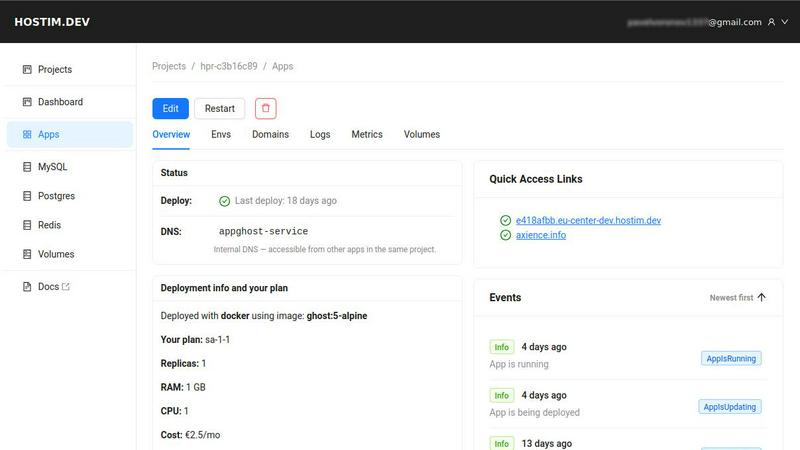
Each application or client project runs in a fully isolated environment with its own namespace. Costs are tracked and billed per project on an hourly basis, starting from €2.50/month. This provides clear, predictable pricing for freelancers and agencies, making it easy to quote clients and avoid unexpected bills from shared resource pools.
Use Cases
HookMesh
E-commerce Notifications
E-commerce platforms can utilize HookMesh to send real-time notifications for events such as order completions, inventory updates, and shipping status changes. This ensures customers receive timely updates, enhancing their overall shopping experience.
SaaS Application Integrations
SaaS applications can leverage HookMesh to facilitate integrations with other services, enabling seamless data synchronization and real-time updates. This allows businesses to connect their applications with third-party services without worrying about webhook delivery failures.
Payment Processing
Payment gateways can use HookMesh to reliably send payment confirmation webhooks to merchants. By ensuring that these critical notifications are consistently delivered, businesses can enhance their transactional accuracy and customer trust.
System Monitoring Alerts
IT teams can implement HookMesh to send alerts and notifications about system status and performance. This proactive approach allows teams to quickly respond to issues, ensuring that systems remain operational and performance thresholds are met.
Hostim.dev
Freelancers Shipping Client Projects
Freelancers can rapidly deploy and hand off projects to clients. By using Docker or Compose, they ensure application portability. Per-project billing allows for clean cost attribution to each client, and the managed infrastructure means no ongoing server maintenance is required after delivery.
Agencies Managing Multiple Client Applications
Agencies can isolate each client's application in a separate project for enhanced security and management. The clear cost breakdown per project simplifies internal accounting and client invoicing. EU-based hosting is a key selling point for agencies with European customers concerned about data sovereignty.
Startups Building and Scaling MVPs
Startups can go from idea to live product incredibly fast, focusing on development instead of DevOps. The platform scales CPU and RAM resources directly from the UI with zero downtime, supporting growth. Predictable costs help early-stage companies manage their burn rate effectively.
Students and Developers Learning Modern Deployment
Students can deploy real-world projects using Docker, databases, and modern frameworks without the complexity of cloud console configuration. The free trial and student credits provide hands-on experience with production-like environments, building a practical portfolio.
Overview
About HookMesh
HookMesh is a cutting-edge solution aimed at simplifying webhook delivery for modern SaaS products. It navigates the complexities associated with in-house webhook management, including retry logic, circuit breakers, and debugging delivery issues. By leveraging HookMesh, businesses can concentrate on their core offerings without being encumbered by technical challenges related to webhook operations. The platform provides battle-tested infrastructure, ensuring dependable delivery through features like automatic retries, exponential backoff, and idempotency keys. HookMesh is perfect for developers and product teams striving to deliver a seamless customer experience while ensuring consistent and reliable webhook event delivery. Additionally, the self-service portal empowers customers with easy endpoint management and visibility, including the ability to replay failed webhooks with just a click, making HookMesh an essential tool for organizations seeking a robust webhook strategy.
About Hostim.dev
Hostim.dev is a bare-metal Platform-as-a-Service (PaaS) that strips away DevOps complexity, allowing developers to deploy containerized applications in minutes. It provides a production-ready environment where you can launch directly from a Docker image, Git repository, or a full Docker Compose file without managing any underlying infrastructure. The platform automatically provisions and connects essential managed services like MySQL, PostgreSQL, Redis, and persistent storage volumes. It also handles internal networking, custom domains with automatic HTTPS, and real-time monitoring out of the box. Every project runs in an isolated Kubernetes namespace on high-performance bare-metal servers located in Germany, ensuring GDPR-compliant hosting by default. With transparent, per-project hourly billing and a free 5-day trial, Hostim.dev is built for developers, freelancers, agencies, and startups. Its core value is enabling you to ship software faster, maintain full container portability, and avoid the unpredictable costs and steep configuration learning curve of traditional large cloud providers.
Frequently Asked Questions
HookMesh FAQ
What is HookMesh used for?
HookMesh is used to simplify and enhance webhook delivery for SaaS products, addressing challenges such as retry logic and endpoint management, ultimately enabling reliable communication between systems.
How does HookMesh ensure reliable delivery of webhooks?
The platform employs automatic retries, exponential backoff, and circuit breakers to manage webhook deliveries. This means that if an endpoint fails, HookMesh will attempt to resend the webhook over a specified time period.
Can I manage my webhook endpoints easily?
Yes, HookMesh provides a self-service customer portal that allows users to add, manage, and monitor their webhook endpoints. Users can view delivery logs and replay any failed webhooks with ease.
What programming languages does HookMesh support?
HookMesh offers SDKs for JavaScript, Python, and Go, making it easy for developers to integrate webhook functionality into their applications with just a few lines of code.
Hostim.dev FAQ
What does the free tier include?
The free tier offers a full-featured 5-day trial project with no credit card required. You get access to all deployment methods (Docker, Git, Compose), built-in databases, persistent volumes, automatic HTTPS, and monitoring. It's a complete experience to test the platform with your actual application stack.
Can I deploy with just a Docker Compose file?
Yes, deploying with a Docker Compose file is a primary feature. You can paste your existing docker-compose.yml file directly into the Hostim.dev dashboard, and the platform will parse it and deploy all defined services, networks, and volumes automatically, making migration and complex app stacks simple.
Where is my app hosted?
All applications are hosted on bare-metal servers in a German data center within the European Union. This ensures GDPR-compliant data handling by default and provides strong performance for users in Europe, with all infrastructure managed by Hostim.dev.
Do I need to know Kubernetes?
No, you do not need to know Kubernetes to use Hostim.dev. The platform uses Kubernetes under the hood to provide robust isolation and orchestration, but it abstracts all that complexity away. You interact only with Docker, Git, or Compose concepts, making it accessible to all developers.
Alternatives
HookMesh Alternatives
HookMesh is a specialized platform designed to enhance webhook delivery for Software as a Service (SaaS) products. It simplifies the complexities associated with in-house webhook management by offering features like automatic retries, reliable delivery mechanisms, and a self-service customer portal. Users often seek alternatives to HookMesh due to varying needs, such as budget constraints, specific feature requirements, or preferences for integration with existing platforms. When choosing an alternative, it is crucial to evaluate aspects like reliability, ease of use, support options, and the overall fit for your team's technical capabilities. In the search for webhook delivery solutions, businesses should prioritize platforms that offer robust delivery guarantees, a user-friendly interface for management, and comprehensive logging capabilities. Additionally, consider the scalability of the solution to ensure it meets future growth requirements and the flexibility provided for integrating with other tools and services in your tech stack.
Hostim.dev Alternatives
Hostim.dev is a streamlined Platform-as-a-Service (PaaS) that simplifies deploying Docker applications with built-in databases on EU-based bare-metal infrastructure. It removes DevOps overhead by managing servers, networking, and service orchestration for you. Developers may seek alternatives for various reasons, such as different pricing models, needing hosting in other geographic regions, requiring specific features not offered, or simply exploring the market to find the best fit for their project's scale and budget. When evaluating other platforms, key considerations include deployment simplicity, integrated service offerings, infrastructure location and compliance, pricing transparency, and whether the platform locks you into a proprietary setup or maintains container portability.