
Deeploy vs Threat Watch
Side-by-side comparison to help you choose the right AI tool.

Deeploy
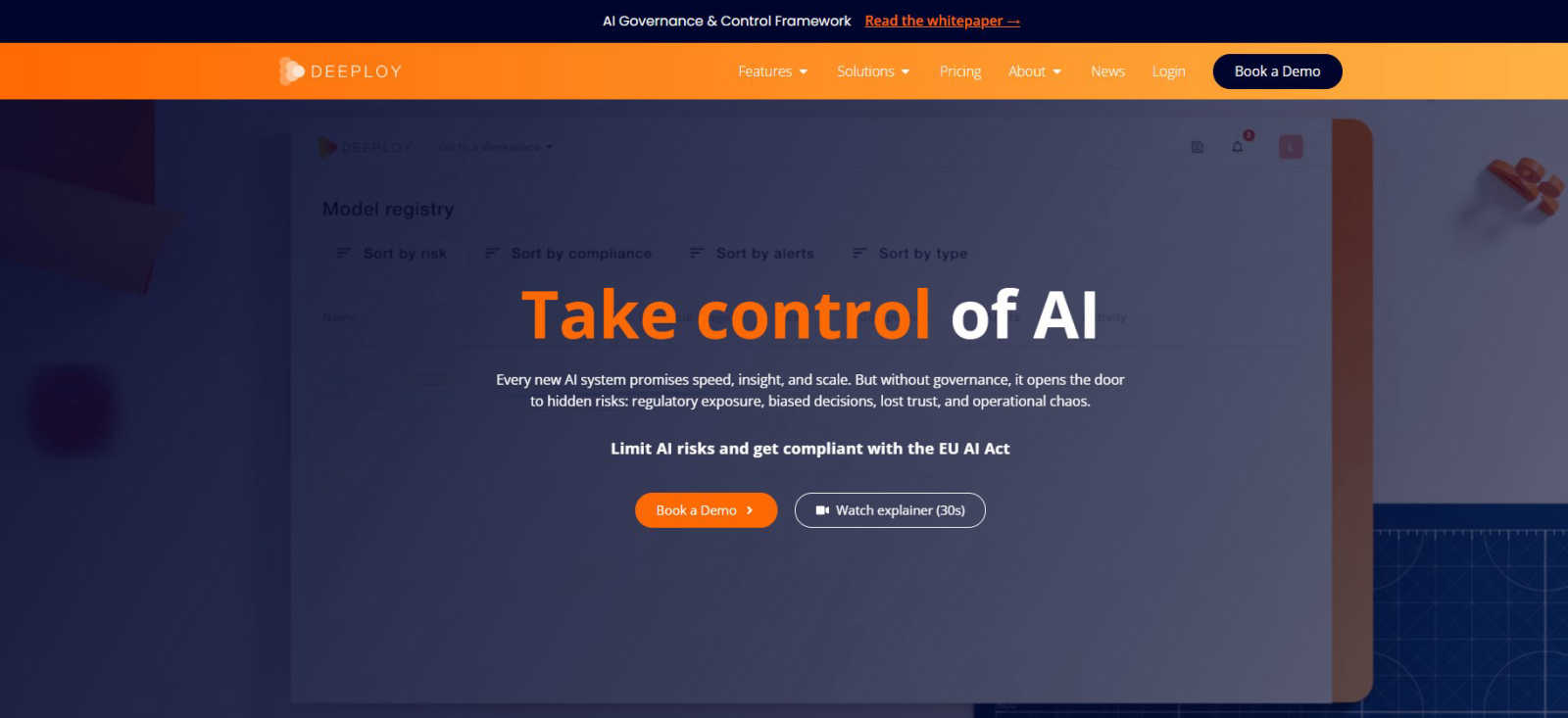
Deeploy enables organizations to govern AI systems effectively, ensuring compliance and reducing risk while scaling.
Last updated: March 1, 2026

Threat Watch
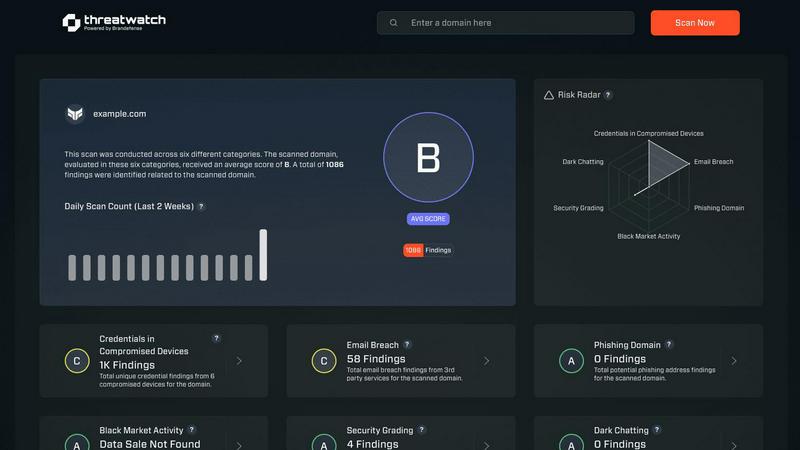
Quickly assess your cybersecurity health with Threat Watch's actionable insights on compromised accounts and devices.
Last updated: March 1, 2026
Visual Comparison
Deeploy
Threat Watch
Feature Comparison
Deeploy
AI Discovery and Onboarding
Deeploy provides complete visibility across your AI landscape. It allows organizations to discover, onboard, and manage every AI system from one intuitive interface, eliminating blind spots and ensuring centralized control without migration complications.
Control Frameworks
Navigate AI regulations effortlessly with Deeploy’s guided workflows. Users can choose from default control frameworks, such as ISO 42001 and NIST AI RMF, or create custom ones, allowing for quick classification of AI system risk and establishing clear accountability.
Control Implementation
Deeploy transforms governance frameworks into enforceable controls, ensuring that every AI system adheres to the right requirements with minimal manual input. Engineers receive clear, actionable requirements, significantly accelerating compliance processes.
Real-time Monitoring
Monitor AI performance in real-time to prevent incidents before they occur. Deeploy provides instant alerts for model drift or performance drops, allowing organizations to identify errors and anomalies proactively, thereby safeguarding compliance and user experience.
Threat Watch
Comprehensive Cyber Health Assessment
Threat Watch provides a detailed evaluation of an organization’s cybersecurity posture by continuously scanning for vulnerabilities, compromised credentials, and potential threats, ensuring a holistic view of security health.
Automated Threat Intelligence
The platform automates the gathering and analysis of complex threat intelligence, reducing manual workload and providing real-time insights that help organizations identify emerging threats and assess their risk levels swiftly.
Prioritized Action Plan
By consolidating fragmented threat data, Threat Watch generates a single prioritized action plan. This enables organizations to focus on the most critical risks and respond effectively to mitigate potential damage.
Dark Web Monitoring
Threat Watch continuously monitors dark web activities to identify compromised credentials and breached accounts, allowing organizations to take immediate action to protect their assets from potential exploitation.
Use Cases
Deeploy
Optimizing AI Oversight
Organizations can utilize Deeploy to gain comprehensive control over dispersed AI systems, consolidating their AI inventory and ensuring compliance with evolving regulations.
Enhancing Compliance Processes
Deeploy simplifies compliance with AI regulations by providing guided workflows, enabling teams to navigate complex requirements without overwhelming complexity.
Streamlining Model Deployment
Data scientists can deploy models rapidly, reducing deployment times from days or weeks to mere hours, while ensuring transparency and observability for both technical and non-technical stakeholders.
Supporting Ethical AI Practices
By integrating human feedback loops and explainability features, Deeploy allows organizations to ensure responsible AI usage, particularly in sensitive environments like healthcare and finance.
Threat Watch
IT Security Monitoring
IT security teams can leverage Threat Watch to continuously monitor their digital assets for vulnerabilities and threats. The platform provides real-time alerts, helping teams respond swiftly to emerging risks.
Risk Management
Risk managers can use Threat Watch to assess the overall cybersecurity health of the organization. The actionable insights provided enable informed decision-making and risk prioritization to protect sensitive data.
Incident Response Planning
Organizations can utilize Threat Watch to develop effective incident response plans. The platform’s real-time threat intelligence assists teams in preparing for potential security incidents, minimizing response times and impact.
Compliance Assurance
Threat Watch aids organizations in maintaining compliance with industry regulations by providing comprehensive assessments of cybersecurity practices. This ensures that organizations meet required standards while safeguarding their data.
Overview
About Deeploy
Deeploy is a comprehensive AI governance software that centralizes oversight, compliance, and monitoring for all AI systems within an organization. As businesses increasingly leverage AI technologies, the demand for effective governance becomes paramount to mitigate risks and ensure alignment with regulatory standards, such as the EU AI Act. Deeploy empowers organizations to manage their AI landscape from a single interface, allowing real-time explainability, human feedback, and robust audit trails. Its flexible onboarding process enables seamless integration with existing MLOps or GenAI platforms, ensuring complete visibility and control over AI initiatives. The primary value proposition of Deeploy lies in its ability to simplify compliance, enhance transparency, and enable organizations to scale their AI efforts confidently while maintaining oversight.
About Threat Watch
Threat Watch is a unified cybersecurity intelligence platform that empowers organizations to gain a clear and actionable view of their digital security posture. Designed for IT security teams, risk managers, and business leaders, it shifts the focus from reactive security to proactive risk management. Threat Watch continuously analyzes an organization's assets, vulnerabilities, and exposures across critical security categories, providing a comprehensive cyber health assessment. Its core value proposition lies in its speed and clarity; the platform automates intricate threat intelligence gathering and analysis, delivering real-time insights. This enables users to identify, prioritize, and mitigate risks more efficiently. By consolidating data on compromised credentials, breached accounts, phishing addresses, and dark web exposures, Threat Watch transforms fragmented threat data into a prioritized action plan, ensuring organizations can act quickly to safeguard their digital environments.
Frequently Asked Questions
Deeploy FAQ
What kind of organizations can benefit from Deeploy?
Deeploy is designed for any organization that utilizes AI technologies, particularly those facing regulatory scrutiny or needing centralized oversight to manage compliance and risk.
How does Deeploy ensure compliance with regulations?
Deeploy provides guided workflows and customizable control frameworks that help organizations navigate complex AI regulations, ensuring compliance is straightforward and efficient.
Can Deeploy integrate with existing systems?
Yes, Deeploy features a flexible onboarding process that allows seamless integration with existing MLOps or GenAI platforms, ensuring no disruption to current operations.
What are the benefits of real-time monitoring?
Real-time monitoring helps organizations detect and address AI performance issues proactively. This feature minimizes compliance risks and enhances user trust by ensuring consistent AI performance.
Threat Watch FAQ
What types of organizations can benefit from Threat Watch?
Threat Watch is designed for a wide range of organizations, including those in finance, healthcare, and technology sectors, where cybersecurity is critical to protecting sensitive information and maintaining compliance.
How does Threat Watch automate threat intelligence?
The platform utilizes advanced algorithms and machine learning to automate the collection and analysis of threat data from various sources, significantly reducing the time and effort required for manual threat assessments.
Can Threat Watch integrate with existing security tools?
Yes, Threat Watch is designed to integrate seamlessly with existing cybersecurity tools and platforms, allowing organizations to enhance their security posture without disrupting current workflows.
What is the process for starting with Threat Watch?
Organizations can easily initiate a free scan through the Threat Watch platform. This initial assessment provides valuable insights into their cybersecurity health, helping them understand their risk landscape.
Alternatives
Deeploy Alternatives
Deeploy is a comprehensive AI governance software that centralizes oversight, compliance, and monitoring for AI systems within organizations. As businesses increasingly adopt AI technologies, the need for effective governance becomes essential to mitigate risks and ensure adherence to regulatory standards. Users often seek alternatives to Deeploy due to various factors, including pricing, specific feature sets, or the need for compatibility with existing platforms. When exploring alternatives, it is crucial to consider features such as AI discovery and onboarding capabilities, control frameworks, and ease of integration with current MLOps or GenAI systems. Users should also evaluate how well an alternative can simplify compliance, enhance transparency, and support scalability in their AI initiatives.
Threat Watch Alternatives
Threat Watch is a comprehensive cybersecurity intelligence platform that empowers organizations to assess their digital security health with actionable insights. Designed for IT security teams, risk managers, and business leaders, it automates complex threat intelligence gathering and offers real-time assessments of vulnerabilities and exposures. Users often seek alternatives due to factors such as pricing, unique feature sets, or specific platform compatibility needs that better align with their organizational goals. When considering alternatives, look for platforms that provide robust threat intelligence, real-time monitoring capabilities, and an intuitive user interface. It's essential to evaluate the comprehensiveness of the cyber health assessments and whether the solution can effectively prioritize risks based on severity and context to ensure proactive risk management.