
KeywordKick vs WeekHack
Side-by-side comparison to help you choose the right AI tool.

KeywordKick
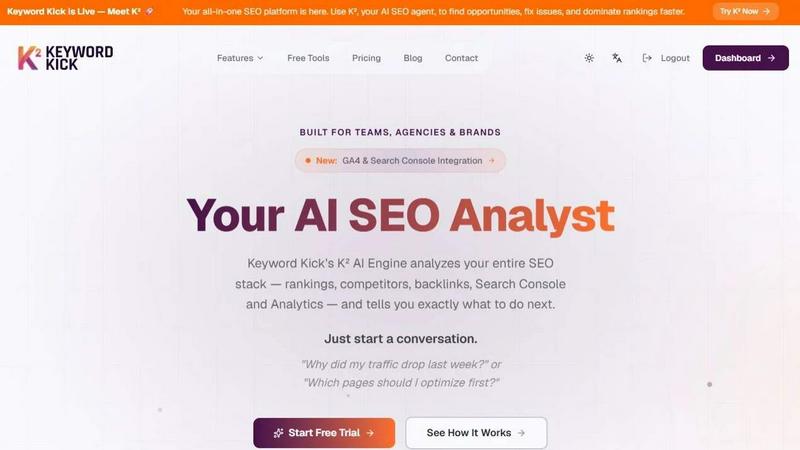
Talk to AI. Actionable SEO from your data.

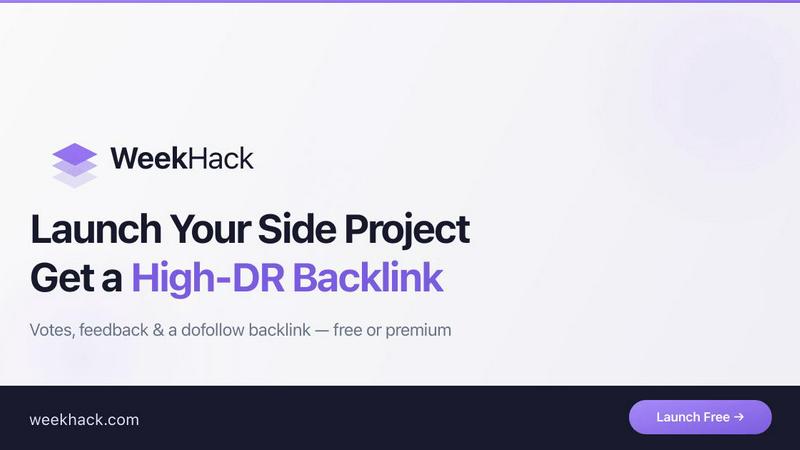
WeekHack helps indie makers launch projects, gain community votes, and secure valuable SEO backlinks weekly.
Last updated: February 26, 2026
Visual Comparison
KeywordKick
WeekHack
Overview
About KeywordKick
KeywordKick is an AI-powered SEO agent you can talk to.
Instead of dashboards and endless reports, it connects your data (Google Search Console, Analytics, rankings, competitors, and backlinks) and tells you exactly what to do next.
Just ask — K² analyzes everything and gives you clear, prioritized actions to improve rankings and grow organic traffic.
Built for founders, marketers, and SEO teams who want execution, not just data.
About WeekHack
WeekHack is an innovative weekly product launch platform designed specifically for makers, indie hackers, solo developers, and bootstrapped founders. This platform provides a unique space where users can submit their side projects for visibility and community engagement. Every week, creators can showcase their products to an audience of like-minded builders who are eager to discover new tools and solutions. Unlike traditional daily launch platforms, which often lead to rapid obsolescence as new products overshadow older submissions, WeekHack allows every product to maintain visibility for a full week. This extended exposure is invaluable for gaining traction and feedback. Additionally, the top three products each week earn winner badges and receive a dofollow backlink from a high authority domain, greatly enhancing their SEO potential. WeekHack is accessible for free submissions, or users can opt for a premium plan at $19, which allows them to select their launch week and secure featured placement. The platform thrives on transparency and community-driven success, focusing on quality products rising to the top without algorithmic biases.