
Lovalingo vs Unicode to Bamini Converter
Side-by-side comparison to help you choose the right AI tool.

Lovalingo
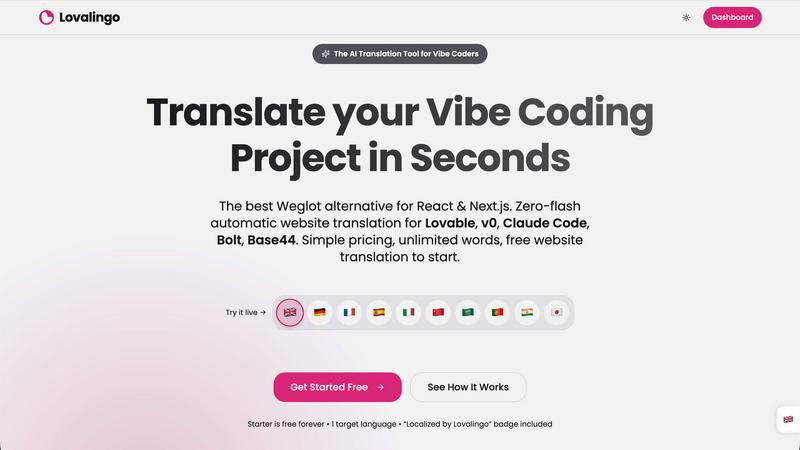
Translate and index React apps in seconds with zero-flash, automated SEO, and unlimited languages using Lovalingo.
Last updated: February 26, 2026

Unicode to Bamini Converter
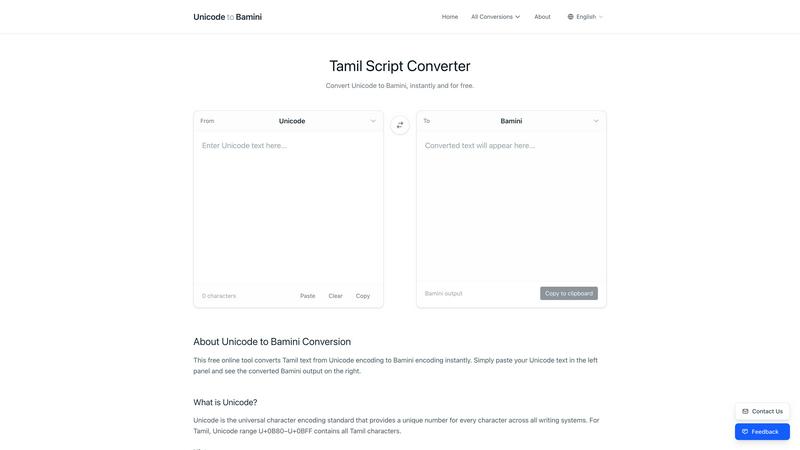
Free online Tamil font converter. Instantly convert between Unicode, Bamini, TSCII, Anjal, and 20+ Tamil encodings. No download required.
Visual Comparison
Lovalingo
Unicode to Bamini Converter
Overview
About Lovalingo
Lovalingo is a cutting-edge AI translation tool designed specifically for developers working with React and Next.js. It streamlines the internationalization (i18n) process by eliminating the need for manual management of translation files and JSON strings. By integrating seamlessly with popular coding tools like Lovable, Bolt, and Claude Code, Lovalingo offers an automated, render-native translation solution that ensures your application is globally accessible from day one. The main value proposition of Lovalingo lies in its ability to provide zero-flash translation, native SEO features, and real-time content updates without the hassle of maintaining complex code structures. This makes it an ideal choice for SaaS founders, agencies, and developers who want to scale their products internationally without the traditional burdens of i18n.
About Unicode to Bamini Converter
Unicode to Bamini Converter is a free, web-based tool designed for converting Tamil text between 25+ font encodings instantly.
Key Features:
- Convert between Unicode, Bamini, TSCII, Anjal, TAB, Dinamani, Murasoli, and 20+ other Tamil font formats
- Instant real-time conversion with no page reloads
- Complete character mapping table for every encoding pair
- No software download or installation required
- Works on desktop and mobile devices
- Available in 5 languages: English, Tamil, Sinhala, Hindi, and Chinese
Who It's For:
Tamil publishers, journalists, and content creators who need to convert legacy Tamil documents (Bamini, TSCII) to modern Unicode format. Also useful for developers, researchers, and anyone working with Tamil text across different encoding systems.
Why It Exists:
Thousands of Tamil documents, newspapers, and archives still use legacy font encodings like Bamini and TSCII. These files require the original fonts installed to display correctly. Converting them to Unicode ensures they are accessible on any modern device, browser, or platform without font dependencies.