
Cybersecurity Readiness Game vs Skene
Side-by-side comparison to help you choose the right AI tool.

Cybersecurity Readiness Game
Test your team's cybersecurity decisions with realistic breach simulations.
Last updated: March 18, 2026

Skene transforms your codebase into a growth engine with AI-driven prompts for smarter, seamless product development.
Last updated: February 28, 2026
Visual Comparison
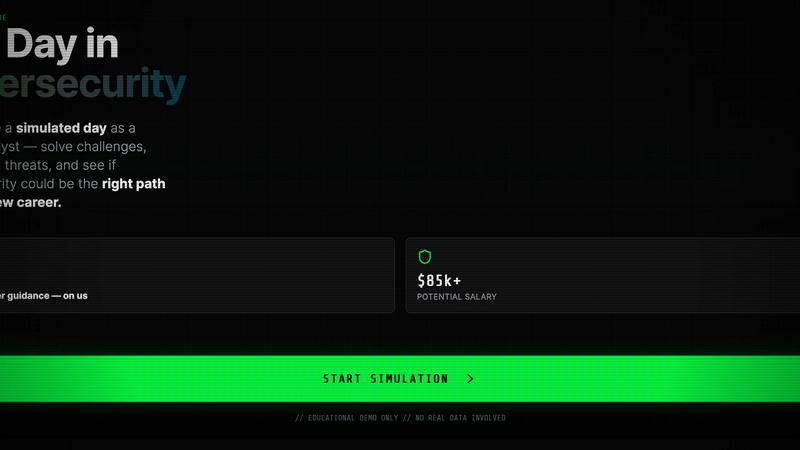
Cybersecurity Readiness Game
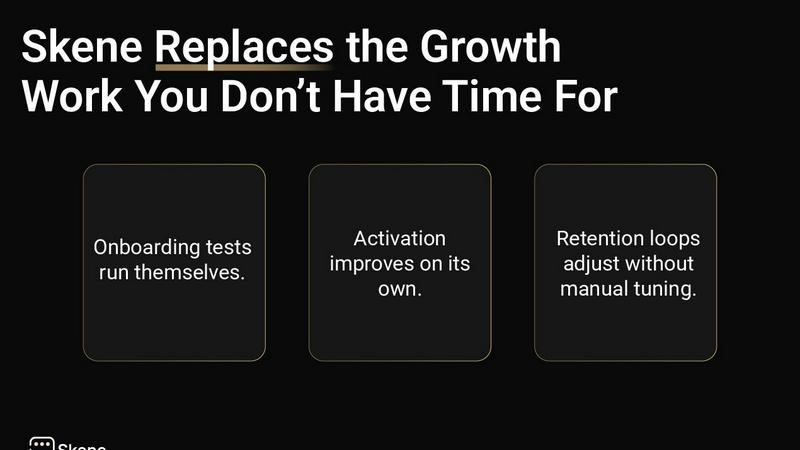
Skene
Feature Comparison
Cybersecurity Readiness Game
No-Cost, Frictionless Access
This tool is completely free and requires no account registration or login. Participants can launch a simulation instantly, removing all barriers to entry and enabling immediate, hands-on practice for individuals or entire teams without administrative overhead.
Real-World Scenario-Based Learning
Users are placed inside authentic cybersecurity incident simulations that mirror actual threats faced by security engineers. This method transforms abstract concepts into tangible decision points, building muscle memory for real incident response.
Clear Performance Metrics & Insights
After each simulation session, participants receive straightforward feedback and performance insights. This evaluation highlights strengths, identifies specific skill gaps, and provides actionable direction on where to focus future training efforts.
Focus on Human Error Mitigation
The game directly targets the primary vulnerability in most organizations: human mistakes. By practicing responses to social engineering, misconfigurations, and other common pitfalls, users build defensive habits that reduce risk.
Skene
Automated Codebase Analysis
Skene automatically scans your application’s source code to identify growth signals, onboarding friction points, and activation opportunities, providing actionable insights for continuous improvement.
Seamless Integration
Connects effortlessly with your GitHub or GitLab repository. Setup is rapid, taking less than 60 seconds, allowing you to focus on developing your product without the hassle of manual configurations.
Real-Time Analytics Dashboard
Offers comprehensive analytics, showcasing user progress, completion rates, and engagement metrics. This allows you to track performance and identify bottlenecks in your onboarding and retention processes.
Outcome-Based Pricing Model
You only pay when customers successfully complete their onboarding journey, making it a cost-effective solution. The free tier includes a limited number of onboardings, with flexible pricing plans available for higher volumes.
Use Cases
Cybersecurity Readiness Game
Career Exploration for Aspiring Professionals
Individuals considering a switch to tech can use the simulation to experience a "day in the life" of a cybersecurity engineer. It provides a practical taste of the role's challenges, helping them assess their interest and aptitude before committing to a full bootcamp or course.
Internal Team Skill Development
Organizations can use the tool for continuous security training. It allows teams to regularly practice their response protocols in a simulated environment, building collective competence and ensuring readiness for actual security incidents.
Security Readiness Assessment
Managers and IT leaders can deploy the game to conduct a baseline assessment of their team's current cybersecurity preparedness. The performance insights reveal collective strengths and vulnerabilities, informing where to allocate training resources.
Reinforcing Security Awareness Training
The game serves as a powerful, engaging complement to traditional security awareness programs. It tests and reinforces theoretical knowledge by having employees apply what they've learned in dynamic, pressure-driven scenarios.
Skene
Enhancing User Onboarding
Skene simplifies the onboarding process by automatically generating user flows based on your codebase, ensuring new users receive tailored guidance that accelerates their journey to activation.
Optimizing Feature Adoption
By analyzing user interactions and identifying friction points, Skene helps you refine your product features, increasing user engagement and ensuring that users fully leverage the capabilities of your application.
Reducing Churn Rates
Skene's real-time analytics empower you to monitor user engagement and retention metrics, enabling proactive measures to address potential churn and enhance user satisfaction.
Supporting Indie Developers
For solo developers or small teams, Skene acts as a virtual growth team, providing essential insights and automation tools that allow them to compete effectively without extensive resources.
Overview
About Cybersecurity Readiness Game
The Cybersecurity Readiness Game is a hands-on simulation tool designed to assess and build practical cybersecurity skills. It immerses participants in realistic, high-stakes threat scenarios, allowing them to practice making critical security decisions in a safe, consequence-free environment. The tool is built for individuals exploring a tech career, security teams looking to upskill, and organizations aiming to close the human error gap—the leading cause of breaches. With no registration required, it offers immediate, free access to scenario-based learning. The core value proposition is straightforward: move beyond theoretical knowledge to applied decision-making. Users engage with credible challenges, see the direct impact of their choices, and receive clear performance insights, providing a true practical view of their cybersecurity readiness and pinpointing exact areas for improvement.
About Skene
Skene is an innovative AI-powered Product-Led Growth (PLG) infrastructure that revolutionizes user growth by seamlessly integrating with your codebase. By functioning as a self-learning growth engine, Skene automates vital elements of PLG, including user onboarding, activation, and retention. Unlike traditional growth tools which require manual setup and external scripts, Skene intelligently analyzes your application's source code to pinpoint user flows, detect friction points, and suggest data-driven enhancements. This capability allows your product to continuously evolve with each code modification. Designed for indie developers and early-stage startups lacking dedicated growth teams, as well as established PLG companies seeking to scale their Lifetime Value (LTV), Skene transforms growth into a manageable, version-controlled infrastructure. This eliminates reliance on external solutions, empowering organizations to take full ownership of their growth processes.
Frequently Asked Questions
Cybersecurity Readiness Game FAQ
What is cybersecurity readiness?
Cybersecurity readiness is an organization's or individual's state of preparedness to effectively prevent, detect, and respond to cyber threats. It involves having the right tools, processes, and—critically—trained people who can make correct decisions under pressure to minimize damage.
Why is cybersecurity readiness important?
It is critical because cybercrime costs are projected to reach $10.5 trillion annually, and over 70% of breaches involve human error. Strong readiness limits financial exposure and directly addresses the human risk gap by building practical, hands-on defensive skills.
Is this tool suitable for someone with no IT background?
Absolutely. The simulation is designed to be accessible for beginners, providing a realistic glimpse into cybersecurity work without requiring prior technical experience. It's an ideal starting point for anyone curious about the field.
How does this tool help address the cybersecurity skills gap?
With a global workforce shortage of over 3 million cybersecurity professionals, this tool helps organizations build skills internally. It provides practical, scalable training that turns existing employees into more security-aware defenders, mitigating the talent crunch.
Skene FAQ
What is PLG software?
PLG software automates the user journey, enabling users to discover value in your product independently of sales or customer success teams, thereby promoting activation and retention.
How is Skene different from traditional customer experience software?
Skene eliminates the need for manual maintenance and brittle UI overlays by reading your codebase directly. It automatically generates onboarding and lifecycle automation, keeping everything updated with each code push.
How long does it take to set up?
Setup is incredibly quick, taking less than 60 seconds. Simply connect your repository, and Skene will analyze your codebase to generate PLG flows without requiring code changes.
Is my code secure with Skene?
Yes, Skene only requires read-only access to your repository. All analysis is conducted in a secure, isolated environment to ensure your code's integrity and confidentiality.
Alternatives
Cybersecurity Readiness Game Alternatives
The Cybersecurity Readiness Game is a productivity and management tool designed to strengthen organizational security posture. It uses real-world breach simulations to let teams practice critical decisions in a risk-free environment, providing clear insights into their performance and readiness levels. Users often explore alternatives for various reasons. Common factors include budget constraints, the need for different feature sets like advanced reporting or integration capabilities, and specific platform requirements such as mobile access or on-premise deployment. The search for a tool that better aligns with an organization's unique workflow or scale is typical. When evaluating alternatives, key considerations should be the quality and realism of the simulation scenarios, the depth of actionable feedback provided to participants, and the tool's ease of deployment. The goal is to find a solution that effectively bridges the human error gap and builds practical, internal cybersecurity skills across your team.
Skene Alternatives
Skene is an AI-driven product-led growth infrastructure that integrates seamlessly with your codebase to optimize user growth. It automates processes like onboarding, activation, and retention by analyzing your application's source code and generating data-driven improvements. Users often seek alternatives to Skene for reasons such as pricing, varying feature sets, or specific platform compatibility needs. When selecting an alternative, consider the level of automation, integration capabilities, and the ability to adapt to your unique growth strategies while ensuring the solution aligns with your current development environment.