
dmaya vs SimpleDraw
Side-by-side comparison to help you choose the right AI tool.

dmaya
dMaya is an AI design platform for agencies to generate UI, get client approval, and export to code.
Last updated: April 13, 2026

SimpleDraw
Create accurate floor plans and scale drawings for free in your browser.
Last updated: March 1, 2026
Visual Comparison
dmaya
SimpleDraw
Feature Comparison
dmaya
Conversational AI Design Generation
Describe your vision in plain text, such as "a minimalist SaaS dashboard for analytics," and dmaya's AI agent generates complete, professional UI screens instantly. It creates coherent layouts, component systems, and responsive variants, providing a solid foundation for any project within seconds, eliminating the blank canvas problem.
Real-Time Iterative Refinement
Communicate directly with the AI to evolve your designs through natural language. Ask to "change the primary color to blue," "swap to a sidebar layout," or "increase the font size." Every requested change is applied precisely and instantly, allowing for rapid exploration of visual directions without manual dragging or styling.
Client Presentation & Feedback Links
Generate a secure, shareable preview link for any project. Clients and stakeholders can view the interactive design directly in their browser, leave feedback, and give approval without needing an account. This streamlines the review cycle from days to minutes, centralizing all communication.
Design-to-Code Export
Export your finalized and approved designs as production-ready, clean HTML, CSS, and JavaScript code. This semantic code is perfectly structured for AI coding assistants like Claude Code or Cursor to pick up and convert into your preferred framework, such as React, Next.js, or Flutter, ensuring a seamless handoff to development.
SimpleDraw
Dedicated Floor Plan Mode
A specialized mode for creating accurate architectural layouts. Quickly draw walls and add doors or windows with single clicks. Access a library of interior fixtures for kitchens, bathrooms, and living spaces. View real-time measurements as you adjust your plan, making it ideal for detailed home project visualization without needing CAD expertise.
Smart Alignment & Precision Tools
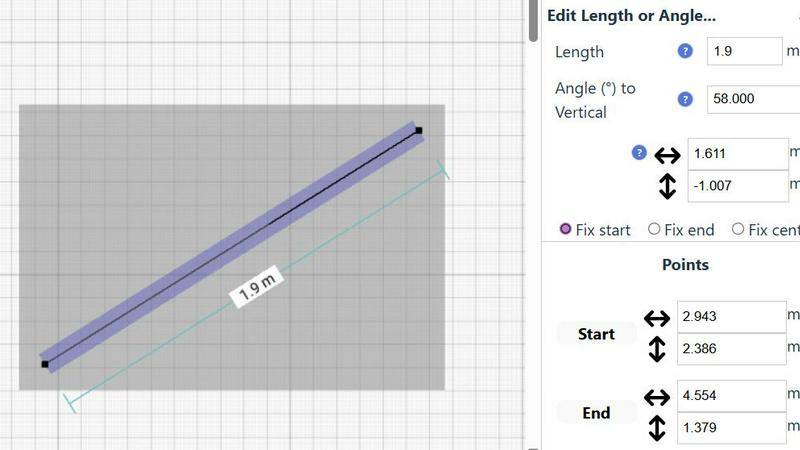
An intelligent system that assists in placing points and lines with exact accuracy. Visual guides help align elements, and the tool automatically snaps to common angles. For full control, use keyboard shortcuts to lock movements to vertical or horizontal axes or zoom in for pixel-perfect placement, adapting the precision level to your needs.
Non-Destructive Editing & Full Control
Every element in your drawing can be modified, moved, or adjusted at any time. Utilize unlimited undo/redo functions and keyboard shortcuts to experiment freely. Edit numerically by inputting exact lengths, angles, and positions via keyboard for perfect iteration. Group elements to copy, paste, and move complex arrangements efficiently.
Comprehensive Measurement System
Work seamlessly in metric or US standard units (feet and inches). Contextual measurements display dynamically as you draw. You have fine-grained control over which dimensions are shown on the final plan, ensuring your drawings communicate the exact information needed for planning and execution.
Use Cases
dmaya
Agency Pitch & Concept Development
Agencies can use dmaya to generate multiple high-fidelity design concepts during initial client discovery calls. This enables them to present tangible visual directions in hours instead of weeks, significantly improving pitch success rates and project kickoff speed.
Product Team Prototyping & Validation
Product teams can rapidly prototype different UI approaches for new features or products before committing engineering resources. This allows for early stakeholder alignment, user testing with realistic designs, and confident decision-making, reducing costly late-stage changes.
Freelancer Project Delivery
Freelancers and solo designers can describe a client's brief and generate a complete first draft in moments. They can then iterate collaboratively with the client via shareable links, enabling them to handle more projects, deliver higher quality, and improve their service offering without increasing hours worked.
Design System Exploration
Teams can use dmaya to quickly explore and define visual foundations. By generating screens and iterating on colors, typography, and spacing through conversation, they can establish consistent design tokens and a cohesive component library before scaling a project.
SimpleDraw
Home Renovation Planning
Plan kitchen or bathroom remodels with accurate scale drawings. Visualize new layouts, appliance placement, and fixture locations before starting construction. Ensure everything fits perfectly and avoid costly measurement mistakes by creating a precise digital blueprint of your renovation project.
Furniture & Room Layout Design
Arrange furniture in your bedroom, living room, or office. Test different layouts to see what fits and creates the best flow. Use the tool to check dimensions before purchasing new furniture, guaranteeing it will suit your space both in size and style.
Creating Real Estate Floor Plans
Generate clear, professional floor plans for apartment listings, house sales, or rental properties. Accurately represent room sizes, layouts, and features to provide potential buyers or tenants with a trustworthy visualization of the property's space.
DIY Project Visualization
Plan and design small construction projects, garden layouts, or workshop setups. Create scale drawings to calculate material needs, spatial relationships, and project feasibility. The tool's precision helps turn conceptual ideas into actionable, well-measured plans.
Overview
About dmaya
dmaya is an AI-powered design platform engineered for professional workflows where visual design and client approval must precede development. It serves agencies, product teams, and freelancers who need to move rapidly from concept to client-ready presentations. Unlike AI tools that generate code directly, dmaya focuses on the critical design-first phase. Users describe an interface—like a SaaS dashboard or e-commerce flow—in plain language, and the AI generates polished, multi-screen UI designs in seconds. The core value is iterative, conversational refinement: you chat with the AI to adjust colors, layouts, and typography in real time. This process ensures intentional visual decisions and team alignment before any code is written. Once a design is approved via shareable client links, dmaya exports clean HTML, CSS, and JS. This output is ready to be handed to AI coding agents like Cursor or Claude Code for implementation in frameworks like React, Next.js, or Flutter. By bridging the gap between ideation and execution, dmaya accelerates the entire design-to-development cycle, turning what used to take days into a process of minutes.
About SimpleDraw
SimpleDraw is a free, browser-based tool that makes precise scale drawing and floor plan creation accessible to everyone. It strips away the complexity and cost of traditional CAD software, offering an intuitive interface that works directly in your web browser. Designed for casual users, DIY enthusiasts, homeowners, and small project planners, its core value is delivering professional-grade accuracy without the steep learning curve. You can start drawing immediately with no login, registration, or software download required. The tool focuses on a powerful yet minimal set of features, including a dedicated Floor Plan Mode, smart alignment aids, and a comprehensive measurement system. This approach transforms tasks like room renovations, furniture arrangement, and space planning from guesswork into a process of digital precision. SimpleDraw ensures your visualizations are accurate, to scale, and easy to create, providing the flexibility of digital editing with the straightforwardness of sketching on paper.
Frequently Asked Questions
dmaya FAQ
How is dmaya different from other AI design tools?
Most AI tools skip the visual design phase and generate code directly, which bypasses the necessary client presentation and approval process. dmaya is built specifically for professional workflows where design comes first. It focuses on generating and iterating high-quality visual designs through conversation, ensuring team alignment and client sign-off before any code is exported.
What kind of designs can I create with dmaya?
dmaya is built to handle a wide range of professional UI/UX projects. You can generate designs for web applications like SaaS dashboards, e-commerce user flows, landing pages, and mobile app screens. The AI understands complex descriptions and can produce multi-screen, responsive layouts with consistent styling.
How does the collaboration with clients work?
You simply generate a shareable preview link from any dmaya project. You send this link to your client or stakeholder. They can view the interactive design in their web browser, leave comments directly on the design, and approve it—all without needing to create an account or install any software.
What code does dmaya export, and how do I use it?
dmaya exports clean, semantic HTML, CSS, and JavaScript. This code is not framework-specific but is structured to be easily interpreted by AI coding agents like Cursor, Claude Code, or GitHub Copilot. You instruct your coding agent to convert this clean code into your desired framework, such as React, Next.js, or Flutter, for final development.
SimpleDraw FAQ
Is SimpleDraw really free to use?
Yes, SimpleDraw is completely free. There is no cost to access the core scale drawing and floor plan creation tools. You can start using it immediately in your browser without any subscription, login, or download required.
Do I need to install any software?
No installation is needed. SimpleDraw is a 100% browser-based application. It works directly in your web browser on desktop computers, eliminating the hassle of software downloads, updates, or system compatibility checks.
Can I use it for professional architectural work?
SimpleDraw is designed for casual users, DIY projects, and basic space planning. While it offers professional-grade precision for its scope, it does not replace full-featured CAD software required for complex architectural, engineering, or commercial construction documentation.
How do I save or export my drawings?
Your drawings are automatically saved in your browser's local storage as you work. For exporting, use your browser's print function to save as a PDF or create an image screenshot. The tool focuses on in-browser creation and real-time planning.
Alternatives
dmaya Alternatives
dmaya is an AI-powered vibe design platform for agencies, teams, and freelancers. It operates in the design tools category, specifically focusing on the visual design and client approval phase that occurs before coding begins. Users can generate and iterate on UI designs through conversation with an AI agent. People often look for alternatives to a tool like dmaya for various reasons. This can include budget constraints, a need for different feature sets like more advanced prototyping or native integrations, or platform-specific requirements such as a preference for desktop applications over web-based tools. Team size and existing workflow compatibility are also key factors. When evaluating alternatives, consider your core needs. Look for a solution that effectively bridges the gap between idea and code, offers a collaborative client review process, and provides output that integrates smoothly with your development stack. The ideal tool should streamline your specific design-to-development workflow.
SimpleDraw Alternatives
SimpleDraw is a free, browser-based tool for creating accurate scale drawings and floor plans. It falls into the category of accessible design and technical drawing software, offering professional-grade precision without the complexity of traditional CAD programs. Users often seek alternatives for various reasons. Some may require advanced features like 3D modeling, extensive object libraries, or team collaboration tools. Others might need offline access, integration with specific platforms, or a different pricing model beyond a free tier. When evaluating alternatives, consider your primary use case, required feature depth, and budget. Key factors include the learning curve, export capabilities, platform availability, and whether the tool supports the specific types of projects you undertake, from simple room layouts to more detailed architectural plans.