
MemMachine vs Storydoc
Side-by-side comparison to help you choose the right AI tool.

MemMachine
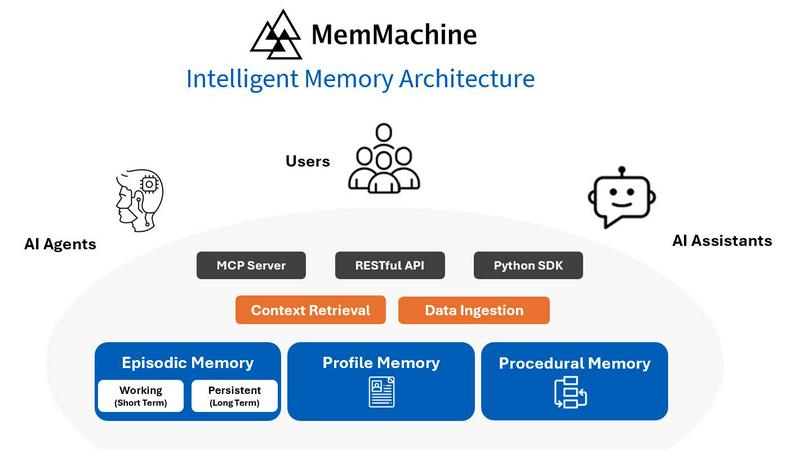
MemMachine is an open-source memory layer that makes AI agents learn and remember across sessions.
Last updated: February 28, 2026

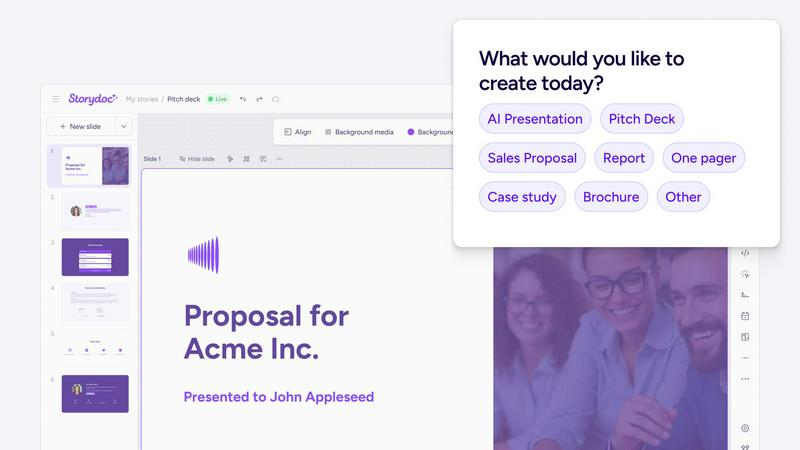
Storydoc automates the creation of interactive presentations and documents, empowering teams to engage and drive results effortlessly.
Last updated: March 26, 2026
Visual Comparison
MemMachine
Storydoc
Feature Comparison
MemMachine
Persistent Memory Layer
MemMachine provides a robust, persistent memory layer that stores and recalls data, preferences, and conversational context across multiple sessions. This ensures AI agents have access to a user's complete history, enabling them to pick up where previous conversations left off and build upon established knowledge for more coherent and intelligent interactions.
Sophisticated User Profiles
The system automatically builds and evolves detailed user profiles by aggregating information from all interactions. This includes storing personal preferences, past behaviors, and specific context, allowing agents to deliver highly personalized responses that demonstrate a deep understanding of the individual user's needs and patterns.
Cross-Session & Cross-Agent Memory
Memory is not siloed to a single agent or session. MemMachine's infrastructure allows memory to persist and be shared across different AI agents and multiple interaction sessions. This creates a unified memory backbone for entire ecosystems of AI applications, ensuring consistency and depth of knowledge.
Open-Source & Developer-Focused
As an open-source solution, MemMachine offers full transparency and flexibility for engineering teams. Developers can integrate its powerful memory capabilities independently, customize the infrastructure to their specific needs, and build advanced, context-aware agents without being locked into a proprietary system.
Storydoc
AI Creation
Storydoc's AI-powered document creation allows users to generate beautifully structured presentations and reports in seconds. This feature eliminates the need for design or writing expertise, enabling anyone to create professional-grade documents effortlessly.
Interactive & Dynamic Elements
The platform supports embedding various interactive components such as videos, buttons, embedded forms, and dynamic calls to action directly within documents. This functionality enhances user engagement and facilitates better communication of ideas.
Personalization & Automation
With smart workflows, Storydoc enables the creation and sharing of personalized documents at scale. Users can integrate dynamic fields and live CRM data, ensuring that each document is tailored to the recipient’s needs and context.
Deep Analytics
Storydoc provides robust analytics tools that track user interactions, including opens, clicks, and scroll depth. This data helps teams understand which content resonates most with their audience and informs future content strategies.
Use Cases
MemMachine
Personalized Healthcare Assistants
Transform generic healthcare chatbots into compassionate, context-aware assistants. MemMachine enables agents to remember patient histories, medication preferences, and appointment patterns to provide tailored advice, empathetic scheduling, and proactive health reminders, dramatically improving patient experience and care.
Intelligent Customer Support
Elevate customer support beyond scripted responses. Support agents powered by MemMachine can recall a customer's entire interaction history, past issues, and resolved solutions. This allows for faster, more accurate support that feels personal and builds customer loyalty through demonstrated understanding.
Evolving Personal AI Companions
Build AI companions that learn and grow with the user over time. Whether for productivity, coaching, or companionship, these agents can remember user goals, preferences, and past conversations to offer increasingly relevant guidance, reminders, and support, simulating a genuine, evolving relationship.
Context-Aware Enterprise Agents
Deploy advanced AI agents for internal enterprise use, such as project management or HR assistants. With MemMachine, these agents retain organizational context, employee preferences, and project histories, enabling them to provide intelligent, personalized automation and insights that improve team collaboration and efficiency.
Storydoc
Sales Presentations
Sales teams can quickly create engaging pitch decks that highlight product benefits and features. The interactive nature of Storydoc presentations helps capture the audience's attention and significantly increases the likelihood of closing deals.
Marketing Proposals
Marketing professionals can draft tailored proposals that incorporate multimedia elements and data-driven insights. This personalized approach enhances the proposal's effectiveness, leading to higher conversion rates.
Corporate Reports
Organizations can turn traditional annual reports into interactive documents that showcase key metrics and insights. By including visual storytelling, companies can make their corporate communications more engaging and informative.
Training Materials
Educators and trainers can utilize Storydoc to develop interactive training materials that enhance learning experiences. By embedding quizzes, videos, and other interactive features, they can better engage participants and improve retention.
Overview
About MemMachine
MemMachine is an open-source memory layer that transforms standard AI agents and applications into intelligent, personalized assistants. It solves the fundamental limitation of traditional AI: the inability to remember past interactions. By providing a persistent memory layer, MemMachine enables applications to learn, store, and recall data, preferences, and context from previous sessions. This creates a sophisticated, evolving user profile that enriches every future interaction. It is built for developers and engineering teams creating advanced AI agents, from customer support chatbots to complex personal assistants. The core value is moving beyond one-off question-and-answer sessions to building context-aware agents that deliver truly empathetic, personalized, and human-like experiences. With MemMachine, your agents don't just respond; they understand, learn, and build relationships over time by persisting memory across multiple sessions, agents, and large language models.
About Storydoc
Storydoc is an innovative AI platform designed to streamline the creation of interactive business presentations and documents such as proposals, pitch decks, and reports. Geared towards sales and marketing teams, Storydoc transforms traditional static files into dynamic, engaging experiences tailored for decision-makers. With its user-friendly interface, professionals can quickly generate on-brand documents without needing design or writing skills. The platform allows users to embed interactive elements like videos, forms, and contracts directly into their collateral, turning passive content into actionable moments. By centralizing document creation, personalization, and engagement tracking in one seamless workflow, Storydoc enhances collaboration and efficiency. Additionally, integrations with Zapier and Make enable teams to leverage live data for scalable personalization. With strong data security measures in place, including ISO 27001 compliance and GDPR adherence, Storydoc ensures a safe environment for all users.
Frequently Asked Questions
MemMachine FAQ
What is MemMachine?
MemMachine is an open-source memory layer designed for AI agents and applications. It provides the infrastructure for agents to persistently store, learn from, and recall information from past interactions, enabling them to become personalized, context-aware assistants rather than stateless chatbots.
How does MemMachine differ from a standard database?
While a database stores data, MemMachine is specifically architected for AI agent memory. It intelligently structures and retrieves conversational context, user preferences, and temporal relationships in a way that is immediately usable by large language models (LLMs) to create coherent, personalized responses, abstracting away the underlying complexity.
Who is MemMachine built for?
MemMachine is built primarily for developers and engineering teams who are creating advanced AI agent applications. It is trusted by teams building everything from customer support chatbots and healthcare assistants to complex personal AI companions and enterprise collaboration tools.
Is my data secure with MemMachine?
As an open-source solution, MemMachine can be deployed within your own infrastructure, giving you full control over your data security and compliance. The architecture allows teams to manage their own data storage, ensuring sensitive information like user profiles and conversation history remains private and secure.
Storydoc FAQ
How does Storydoc ensure data security?
Storydoc adheres to strict data security protocols, including ISO 27001 compliance and GDPR regulations. Additionally, secure Single Sign-On (SSO) authentication protects user data and privacy.
Can I integrate Storydoc with other tools?
Yes, Storydoc offers integrations with platforms like Zapier and Make, allowing users to pull live data and create personalized content at scale, enhancing workflow efficiency.
Is there a trial period available for new users?
Absolutely! Storydoc offers a 14-day free trial that allows new users to explore its features without the need for a credit card. This trial provides a risk-free opportunity to experience the platform.
What types of documents can I create with Storydoc?
Users can create a wide range of business documents, including presentations, proposals, reports, one-pagers, and more. The platform is designed to cater to various professional needs across different industries.
Alternatives
MemMachine Alternatives
MemMachine is an open-source memory layer for AI agents, enabling them to learn and remember user context across sessions. It belongs to the category of AI agent infrastructure, specifically designed to add persistent, personalized memory to applications. Users may explore alternatives for various reasons. Some seek different pricing models, more specialized features, or specific integrations with their existing tech stack. Others might prioritize a fully managed service over an open-source solution they must host themselves. When evaluating alternatives, key considerations include the memory architecture, deployment flexibility, and integration capabilities. Look for solutions that offer robust data persistence, seamless LLM compatibility, and the ability to scale with your application's needs.
Storydoc Alternatives
Storydoc is an AI-driven platform designed to automate the creation of business presentations and documents, focusing on enhancing engagement through interactive storytelling. It serves sales and marketing teams by transforming static content into dynamic experiences, enabling users to embed multimedia elements directly into their documents. Users often seek alternatives to Storydoc due to factors such as pricing, specific feature sets, or compatibility with existing workflows and systems. When choosing an alternative, consider the platform's usability, customization options, integration capabilities, and data security measures. Evaluate whether the alternative can meet your specific needs for document creation and engagement tracking, as well as how well it aligns with your organization's overall goals and technology stack.