
Image to Music AI vs Tickari
Side-by-side comparison to help you choose the right AI tool.

Image to Music AI
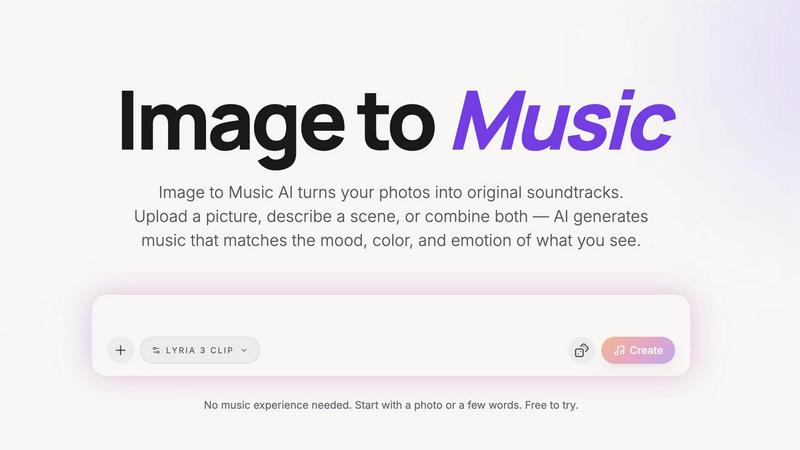
Turn any photo into an original AI-generated soundtrack. Upload an image, add a prompt, and download your music.

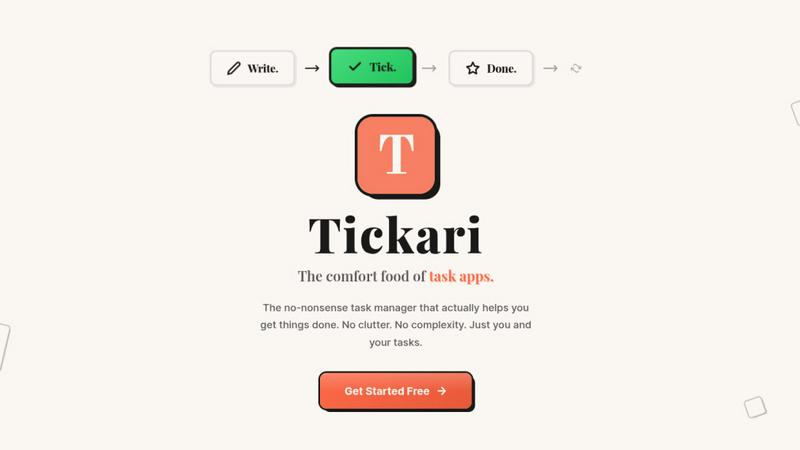
The no-nonsense task manager that actually helps you get things done. No clutter. No complexity. Just you and your tasks.
Visual Comparison
Image to Music AI
Tickari
Overview
About Image to Music AI
Image to Music AI is an AI-powered music generator that turns photos into original soundtracks. Simply upload any image — a landscape, portrait, or concept art — and the AI reads its mood, colors, and visual energy to compose a matching music track.
You can also add a text prompt to steer the genre, tempo, and instrumentation. Combine image and text inputs for full creative control.
Key features:
Photo-to-music and text-to-music generation modes
Powered by Google Lyria (advanced AI music model)
Generate multiple versions and compare side by side
Download finished tracks as audio files
Generation time: approximately 2–5 minutes
No music experience required
Free tier available with credits-based pricing
Perfect for photographers, video creators, travel bloggers, and anyone who wants to give their visuals a unique AI-generated soundtrack.
About Tickari
Tickari is a deliberately minimal, no-nonsense task manager designed for people who are tired of overcomplicated productivity tools and just want to get things done. Instead of overwhelming you with features like complex boards, AI-generated suggestions, or endless customization, Tickari focuses on a simple, frictionless workflow: write a task, tick it off, and move on.
The product embraces a “less but better” philosophy—eliminating clutter, reducing cognitive overhead, and removing the need for onboarding tutorials or setup processes. There are no distractions, no unnecessary decisions, and no feature bloat—just a clean interface that works instantly the moment you open it. This makes it particularly effective for users who feel stuck organizing tasks instead of actually completing them.