
Image to Music AI vs Product Launchpad
Side-by-side comparison to help you choose the right AI tool.

Image to Music AI
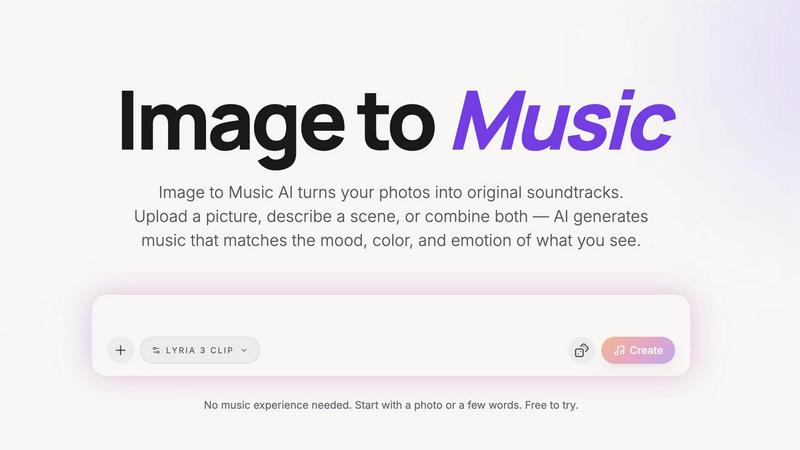
Turn any photo into an original AI-generated soundtrack. Upload an image, add a prompt, and download your music.

Launch your product to early adopters and keep getting visibility, traffic, and users over time.
Visual Comparison
Image to Music AI
Product Launchpad

Overview
About Image to Music AI
Image to Music AI is an AI-powered music generator that turns photos into original soundtracks. Simply upload any image — a landscape, portrait, or concept art — and the AI reads its mood, colors, and visual energy to compose a matching music track.
You can also add a text prompt to steer the genre, tempo, and instrumentation. Combine image and text inputs for full creative control.
Key features:
Photo-to-music and text-to-music generation modes
Powered by Google Lyria (advanced AI music model)
Generate multiple versions and compare side by side
Download finished tracks as audio files
Generation time: approximately 2–5 minutes
No music experience required
Free tier available with credits-based pricing
Perfect for photographers, video creators, travel bloggers, and anyone who wants to give their visuals a unique AI-generated soundtrack.
About Product Launchpad
ProductLaunchpad is a launch platform for founders, indie hackers, and marketing teams who want consistent growth, not a short spike. Most platforms give you attention for a day. After that, your product disappears. ProductLaunchpad is built differently.
Your product stays discoverable and continues to reach early adopters over time. You can launch in minutes with AI-assisted submission, get a free dofollow backlink, and improve your visibility in search engines and LLMs.
The focus is on long-term exposure and matching products with the right users. This helps you generate ongoing traffic, feedback, and signups instead of chasing one-time launch metrics.