
Giga AI vs qtrl.ai
Side-by-side comparison to help you choose the right AI tool.

Giga AI eliminates coding errors so your AI builds the right app faster.
Last updated: February 28, 2026

qtrl.ai
qtrl.ai empowers QA teams to scale testing with AI while maintaining complete control and governance over processes.
Last updated: March 4, 2026
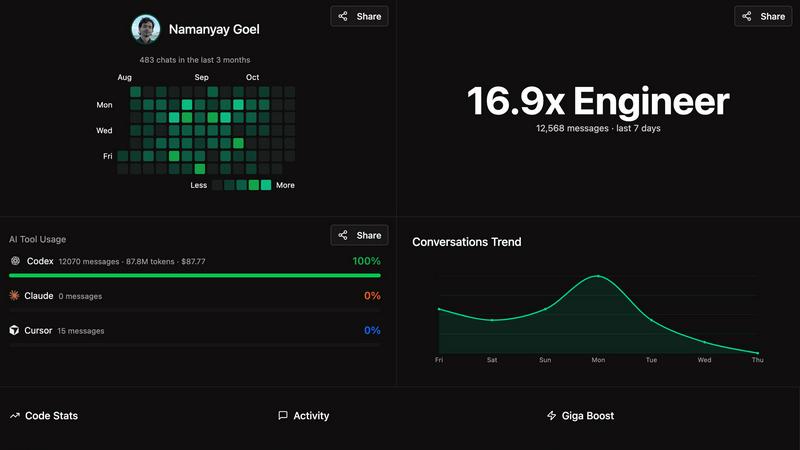
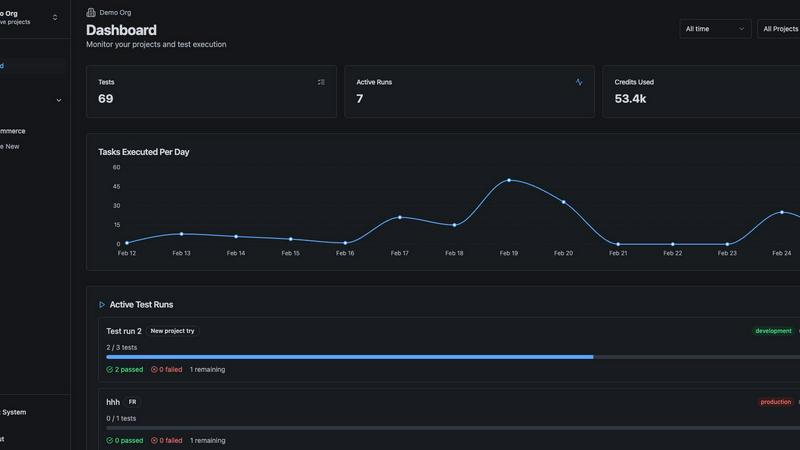
Visual Comparison
Giga AI
qtrl.ai
Feature Comparison
Giga AI
Context Engineering & Project Brain
Giga AI deeply analyzes your codebase to create a comprehensive understanding of your project. It generates multiple 'rules' files that serve as a persistent memory and guide for your AI, ensuring it never gets lost or hallucinates about non-existent code. This foundational context is what powers all other features, aligning AI output with your specific architecture and goals.
Multi-Platform Integration
Seamlessly install Giga AI in seconds on all popular AI coding environments. It works directly within Cursor, Claude Code, VS Code, and other leading platforms. This native integration means there's no context switching; Giga operates silently in the background of your existing workflow, enhancing your primary tools without disruption.
Error & Hallucination Reduction
Giga AI is specifically engineered to cut down on AI mistakes. By providing your AI with accurate, real-time context about your project, it drastically reduces bugs, incorrect code suggestions, and hallucinations about integrations or existing functions. Builders report a 72% reduction in errors, saving countless hours typically spent on debugging.
Autonomous Workflow Enablement
With Giga AI managing context, you can trust your AI to handle more complex, multi-step tasks autonomously. The tool provides the stability and understanding needed for the AI to execute longer plans (like 50-item task lists) without constant supervision or re-prompting, turning you from a micromanager into an architect.
qtrl.ai
Autonomous QA Agents
qtrl.ai's autonomous QA agents execute instructions on demand or continuously, providing the flexibility to run tests across multiple environments at scale. These agents operate within your defined rules, ensuring that real browser execution is achieved without relying on simulations.
Enterprise-Grade Test Management
The platform offers centralized management of test cases, plans, and runs, ensuring full traceability and comprehensive audit trails. With support for both manual and automated workflows, it is designed to meet compliance and auditability requirements, making it suitable for enterprises.
Progressive Automation
Begin with human-written test instructions and progressively transition to AI-generated tests as your team becomes ready. qtrl.ai suggests new tests based on coverage gaps, enabling teams to review, approve, and refine tests at every stage of the process.
Adaptive Memory
qtrl.ai builds a living knowledge base of your application, learning from exploration, test execution, and identified issues. This capability powers context-aware test generation, becoming more effective with each interaction and enhancing overall testing efficiency.
Use Cases
Giga AI
Accelerating Solo Developers & Hackers
Individual builders and solo founders use Giga AI to multiply their productivity. It allows them to move from idea to execution faster by ensuring their AI assistant correctly implements features, understands project patterns, and avoids time-consuming errors, effectively acting as a always-available senior engineer.
Onboarding & Context for Teams
Development teams use Giga AI to instantly provide new members or AI assistants with deep project context. Instead of manual onboarding, Giga's generated rules files give AI (and by extension, developers) immediate understanding of the codebase structure, standards, and existing modules, speeding up contribution time.
Managing Complex Client Projects
Freelancers and consultants working on tight deadlines for clients rely on Giga AI to navigate unfamiliar or complex codebases quickly. It helps solve difficult problems, like implementing custom authentication, by ensuring the AI's suggestions are relevant and functional within the specific project environment, preventing costly missteps.
Refactoring & Large-Scale Code Changes
When undertaking significant refactoring or adding major features, Giga AI keeps the AI assistant aligned with the intended architectural changes. It prevents the AI from suggesting outdated patterns or breaking existing functionality, making large-scale code generation and modification safer and more reliable.
qtrl.ai
Product-Led Engineering Teams
For product-led engineering teams, qtrl.ai facilitates rapid testing cycles without sacrificing quality. Teams can manage test cases effectively while leveraging AI for automation, ensuring that product releases are both timely and reliable.
QA Teams Scaling Beyond Manual Testing
QA teams looking to expand their testing capabilities find qtrl.ai invaluable. The combination of enterprise-grade test management and AI-driven automation allows these teams to move beyond manual testing, increasing efficiency and accuracy in their workflows.
Companies Modernizing Legacy QA Workflows
Organizations transitioning from outdated QA practices can leverage qtrl.ai to modernize their quality assurance processes. With progressive automation and built-in compliance features, teams can streamline testing and adapt to new technologies seamlessly.
Enterprises Requiring Governance and Traceability
For enterprises that mandate strict governance and traceability, qtrl.ai provides comprehensive audit trails and permissioned autonomy levels. This ensures that all testing activities are transparent, controlled, and compliant with industry regulations.
Overview
About Giga AI
Giga AI is a context engineering tool that supercharges AI-powered coding assistants like Cursor, Claude Code, and VS Code. It solves the core frustration of AI development: hallucinations, errors, and a lack of project understanding. Giga AI acts as your AI's "project brain," automatically analyzing your entire codebase to generate intelligent rules and context. This ensures your AI assistant always understands your project structure, goals, and existing code, leading to accurate, relevant, and higher-quality code generation. Built for entrepreneurs, developers, and teams of all technical levels, Giga AI dramatically reduces debugging time, eliminates repetitive prompting, and cuts errors by up to 72%. By keeping your AI focused on your vision, it enables builders to ship faster, saving an average of 20 hours per month. With over 10,000 builders trusting it, Giga AI is the essential layer for reliable, efficient, and error-free AI-assisted development.
About qtrl.ai
qtrl.ai is a cutting-edge quality assurance platform engineered to empower software teams in scaling their QA processes while maintaining robust control and governance. By merging enterprise-level test management with advanced AI automation, qtrl.ai serves as a centralized hub for organizing test cases, planning test runs, and tracing requirements to coverage. The platform offers real-time dashboards that provide insights into testing status, pass rates, and potential risks, enabling engineering leads and QA managers to make informed decisions.
What sets qtrl.ai apart is its progressive AI layer, which allows teams to adopt intelligent automation incrementally. Starting with manual test management, teams can gradually transition to autonomous agents that generate UI tests from plain English descriptions. These agents manage tests as applications evolve and execute them across various browsers and environments. This makes qtrl.ai an ideal solution for product-led engineering teams, QA groups moving away from manual testing, organizations modernizing outdated workflows, and enterprises that demand strict compliance and audit trails. Ultimately, qtrl.ai aims to bridge the gap between the slow pace of manual testing and the complexities of traditional automation, offering a reliable path toward faster, more intelligent quality assurance.
Frequently Asked Questions
Giga AI FAQ
How does Giga AI actually work with my code editor?
Giga AI installs as an extension or plugin into your supported editor (like Cursor or VS Code). Once installed, it performs an automatic, one-click analysis of your codebase. It reads your project structure, files, and dependencies to generate context rules. These rules are then referenced by your AI coding assistant in the background every time you prompt it, guiding its responses.
Is my code safe and private with Giga AI?
Yes. Giga AI emphasizes that your code is never stored or trained on. The analysis happens locally or in a secure, transient manner to generate the context rules needed for your session. Your proprietary codebase and data remain confidential and are not used to improve public AI models.
Can non-technical founders really use Giga AI?
Absolutely. Giga AI is designed to help both technical and non-technical users. For non-technical builders, it is particularly valuable because it reduces the complexity of directing AI. By keeping the AI focused on the project's goals and context, it minimizes technical miscommunication, allowing founders to build their vision without deep coding expertise.
What if I switch between different projects?
Giga AI is built to handle multiple projects seamlessly. It can analyze and maintain separate context rule sets for each of your different codebases. When you open a project, Giga recognizes it and applies the correct context, ensuring your AI always has the right "project brain" active for the work you're doing.
qtrl.ai FAQ
How does qtrl.ai ensure test accuracy?
qtrl.ai ensures test accuracy by allowing teams to write high-level instructions that the platform executes precisely as described. Additionally, the AI layer suggests new tests based on coverage gaps, enabling continuous improvement.
What makes qtrl.ai different from traditional QA tools?
qtrl.ai distinguishes itself with its progressive automation approach, allowing teams to start with manual testing and gradually integrate AI. This mitigates the risks associated with fully autonomous systems, providing a balanced solution.
Can qtrl.ai integrate with existing tools?
Yes, qtrl.ai is designed to work seamlessly with your existing tools and workflows. It supports requirements management integration and CI/CD pipeline compatibility, enhancing your current QA processes.
Is qtrl.ai suitable for all types of organizations?
Absolutely. qtrl.ai caters to various organizations, from product-led engineering teams and QA groups scaling beyond manual testing to enterprises needing strict governance and traceability. Its flexibility makes it adaptable to diverse QA needs.
Alternatives
Giga AI Alternatives
Giga AI is an AI-powered app development platform designed to streamline the creation of applications for entrepreneurs and developers. It focuses on enhancing AI context, reducing errors, and accelerating the coding process through intelligent features. Users often explore alternatives for various reasons, such as budget constraints, specific feature requirements not offered, or a need for a different platform or integration ecosystem. The search for the right tool is highly personal to a project's scope and technical needs. When evaluating an alternative, consider the core value: does it effectively manage AI context to minimize errors? Look for tools that offer robust planning assistance, adapt to your workflow, and provide a reliable path from idea to functional application, regardless of your technical background.
qtrl.ai Alternatives
qtrl.ai is a cutting-edge quality assurance platform designed to aid software teams in scaling their testing efforts with the help of AI agents while maintaining complete control and governance. By combining robust test management capabilities with intelligent automation, qtrl.ai serves as a centralized hub for organizing test cases, planning runs, and tracking quality metrics in real-time. Users often seek alternatives to qtrl.ai for a variety of reasons, including pricing, specific feature requirements, and compatibility with existing platforms. When evaluating alternatives, it’s crucial to consider factors such as ease of use, integration capabilities, the extent of AI features, and the overall cost to ensure the chosen solution aligns with the team's unique needs and workflow.