
dmaya vs Postproxy
Side-by-side comparison to help you choose the right AI tool.

dmaya
dMaya is an AI design platform for agencies to generate UI, get client approval, and export to code.
Last updated: April 13, 2026

Postproxy
Postproxy simplifies social media publishing by unifying multiple networks into one seamless API integration.
Last updated: February 26, 2026
Visual Comparison
dmaya
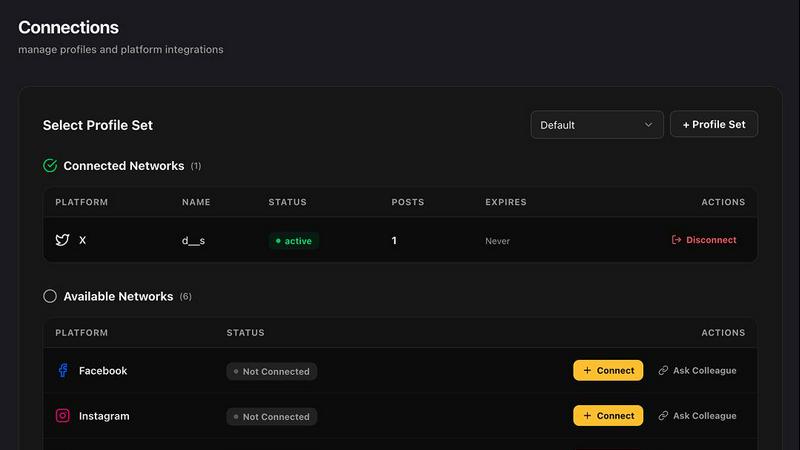
Postproxy
Feature Comparison
dmaya
Conversational AI Design Generation
Describe your vision in plain text, such as "a minimalist SaaS dashboard for analytics," and dmaya's AI agent generates complete, professional UI screens instantly. It creates coherent layouts, component systems, and responsive variants, providing a solid foundation for any project within seconds, eliminating the blank canvas problem.
Real-Time Iterative Refinement
Communicate directly with the AI to evolve your designs through natural language. Ask to "change the primary color to blue," "swap to a sidebar layout," or "increase the font size." Every requested change is applied precisely and instantly, allowing for rapid exploration of visual directions without manual dragging or styling.
Client Presentation & Feedback Links
Generate a secure, shareable preview link for any project. Clients and stakeholders can view the interactive design directly in their browser, leave feedback, and give approval without needing an account. This streamlines the review cycle from days to minutes, centralizing all communication.
Design-to-Code Export
Export your finalized and approved designs as production-ready, clean HTML, CSS, and JavaScript code. This semantic code is perfectly structured for AI coding assistants like Claude Code or Cursor to pick up and convert into your preferred framework, such as React, Next.js, or Flutter, ensuring a seamless handoff to development.
Postproxy
Unified API Integration
Postproxy provides a single API endpoint that replaces the need for individual platform integrations. This eliminates the chaos of managing multiple API calls, allowing users to publish content seamlessly across platforms without worrying about the unique requirements of each social network.
Automated Content Adaptation
This feature ensures that content is flawlessly transformed to meet the specific requirements of various platforms. Postproxy automatically adjusts formats, media limits, and text validation, saving users from the tedious task of manual adjustments for each platform.
Robust Error Handling
Postproxy is designed to manage operational failures gracefully. It incorporates automatic retries, rate limit handling, and quota awareness, ensuring that users experience minimal disruptions during the publishing process.
Clear Publish State Reporting
Users benefit from explicit publish states that provide detailed feedback on the success or failure of their content submissions. This transparency enables users to understand what worked, what didn’t, and why, without having to conduct manual checks.
Use Cases
dmaya
Agency Pitch & Concept Development
Agencies can use dmaya to generate multiple high-fidelity design concepts during initial client discovery calls. This enables them to present tangible visual directions in hours instead of weeks, significantly improving pitch success rates and project kickoff speed.
Product Team Prototyping & Validation
Product teams can rapidly prototype different UI approaches for new features or products before committing engineering resources. This allows for early stakeholder alignment, user testing with realistic designs, and confident decision-making, reducing costly late-stage changes.
Freelancer Project Delivery
Freelancers and solo designers can describe a client's brief and generate a complete first draft in moments. They can then iterate collaboratively with the client via shareable links, enabling them to handle more projects, deliver higher quality, and improve their service offering without increasing hours worked.
Design System Exploration
Teams can use dmaya to quickly explore and define visual foundations. By generating screens and iterating on colors, typography, and spacing through conversation, they can establish consistent design tokens and a cohesive component library before scaling a project.
Postproxy
Streamlined Content Distribution
Businesses can use Postproxy to streamline their content distribution process. By integrating the API into their existing workflows, they can publish across multiple social media platforms simultaneously, reducing the time and effort involved in managing separate accounts.
Automated Marketing Campaigns
Marketers can leverage Postproxy to automate their social media campaigns. By connecting their marketing automation tools like Zapier or n8n, they can trigger content publishing based on user engagement or other metrics, allowing for timely and relevant posts.
Efficient Content Management
Content creators can utilize Postproxy to manage their publishing schedules efficiently. With the ability to publish drafts and schedule posts across various platforms, creators can maintain a consistent online presence without the hassle of manual posting.
Scalable Publishing Solutions
As businesses grow, so do their publishing needs. Postproxy allows organizations to scale their publishing efforts effortlessly, enabling them to publish a high volume of content without adding unnecessary complexity to their workflows.
Overview
About dmaya
dmaya is an AI-powered design platform engineered for professional workflows where visual design and client approval must precede development. It serves agencies, product teams, and freelancers who need to move rapidly from concept to client-ready presentations. Unlike AI tools that generate code directly, dmaya focuses on the critical design-first phase. Users describe an interface—like a SaaS dashboard or e-commerce flow—in plain language, and the AI generates polished, multi-screen UI designs in seconds. The core value is iterative, conversational refinement: you chat with the AI to adjust colors, layouts, and typography in real time. This process ensures intentional visual decisions and team alignment before any code is written. Once a design is approved via shareable client links, dmaya exports clean HTML, CSS, and JS. This output is ready to be handed to AI coding agents like Cursor or Claude Code for implementation in frameworks like React, Next.js, or Flutter. By bridging the gap between ideation and execution, dmaya accelerates the entire design-to-development cycle, turning what used to take days into a process of minutes.
About Postproxy
Postproxy is an innovative API service designed to streamline social media publishing across multiple platforms, including Instagram, Facebook, YouTube, LinkedIn, and X. It serves developers, automators, and businesses that need a reliable solution for content distribution without the hassle of managing individual integrations. By automating OAuth, handling rate limits, managing retries, and adapting content to fit various platform specifications, Postproxy simplifies the complexities of social media publishing into one unified endpoint. This allows users to focus on content creation rather than the operational challenges that typically accompany social media management. With a free plan available, Postproxy enables users to scale their publishing efforts as their needs grow, making it an essential tool for any organization looking to enhance its digital presence.
Frequently Asked Questions
dmaya FAQ
How is dmaya different from other AI design tools?
Most AI tools skip the visual design phase and generate code directly, which bypasses the necessary client presentation and approval process. dmaya is built specifically for professional workflows where design comes first. It focuses on generating and iterating high-quality visual designs through conversation, ensuring team alignment and client sign-off before any code is exported.
What kind of designs can I create with dmaya?
dmaya is built to handle a wide range of professional UI/UX projects. You can generate designs for web applications like SaaS dashboards, e-commerce user flows, landing pages, and mobile app screens. The AI understands complex descriptions and can produce multi-screen, responsive layouts with consistent styling.
How does the collaboration with clients work?
You simply generate a shareable preview link from any dmaya project. You send this link to your client or stakeholder. They can view the interactive design in their web browser, leave comments directly on the design, and approve it—all without needing to create an account or install any software.
What code does dmaya export, and how do I use it?
dmaya exports clean, semantic HTML, CSS, and JavaScript. This code is not framework-specific but is structured to be easily interpreted by AI coding agents like Cursor, Claude Code, or GitHub Copilot. You instruct your coding agent to convert this clean code into your desired framework, such as React, Next.js, or Flutter, for final development.
Postproxy FAQ
What platforms does Postproxy support?
Postproxy supports multiple platforms including Instagram, Facebook, YouTube, LinkedIn, and X, allowing for seamless publishing across these networks through a single API.
How does Postproxy handle errors during publishing?
Postproxy incorporates robust error handling mechanisms, including automatic retries and rate limit management, ensuring that users face minimal disruptions when publishing their content.
Is there a free plan available?
Yes, Postproxy offers a free plan that allows users to get started without any financial commitment. As your publishing needs grow, you can scale to paid plans that offer additional features.
How do I integrate Postproxy into my existing systems?
Integrating Postproxy is simple. Users need to create an account, generate an API key, and connect their social media accounts. Once set up, publishing can be done via a unified API call.
Alternatives
dmaya Alternatives
dmaya is an AI-powered vibe design platform for agencies, teams, and freelancers. It operates in the design tools category, specifically focusing on the visual design and client approval phase that occurs before coding begins. Users can generate and iterate on UI designs through conversation with an AI agent. People often look for alternatives to a tool like dmaya for various reasons. This can include budget constraints, a need for different feature sets like more advanced prototyping or native integrations, or platform-specific requirements such as a preference for desktop applications over web-based tools. Team size and existing workflow compatibility are also key factors. When evaluating alternatives, consider your core needs. Look for a solution that effectively bridges the gap between idea and code, offers a collaborative client review process, and provides output that integrates smoothly with your development stack. The ideal tool should streamline your specific design-to-development workflow.
Postproxy Alternatives
Postproxy is a design tool that simplifies social media publishing through a unified API. It allows users to publish content to multiple platforms, including Instagram, Facebook, YouTube, LinkedIn, and X, streamlining the process by automating various tasks such as OAuth management and analytics. Users often seek alternatives to Postproxy for various reasons, including budget constraints, specific feature requirements, or compatibility with different platforms. When choosing an alternative, consider factors such as ease of use, scalability, integration options, and overall value to ensure it meets your publishing needs effectively.