
AdKit vs Product Launchpad
Side-by-side comparison to help you choose the right AI tool.

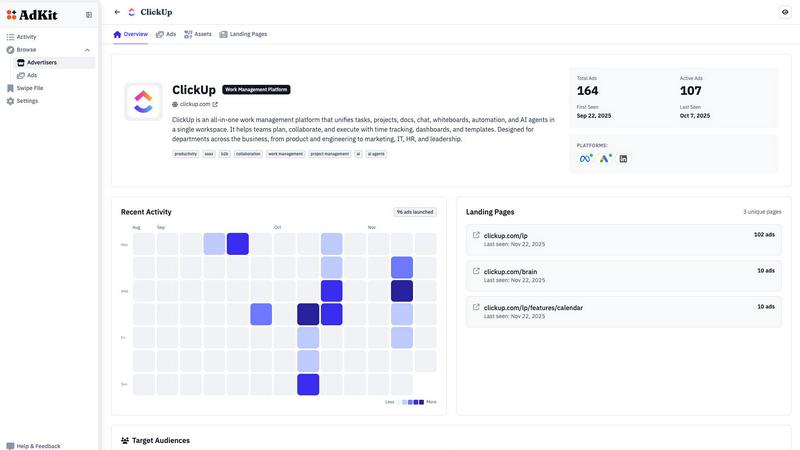
AdKit helps you discover winning ads and create your own with AI to supercharge your SaaS or app marketing efforts.
Last updated: March 1, 2026

Launch your product to early adopters and keep getting visibility, traffic, and users over time.
Visual Comparison
AdKit
Product Launchpad
Overview
About AdKit
AdKit is a comprehensive advertising toolkit designed specifically for SaaS companies and mobile app developers. It addresses the common challenges of inefficient ad creation by offering a unified platform that integrates a massive, searchable ad library with advanced AI generation tools. With access to over 100,000 ads from various platforms including Meta, Google, and LinkedIn, users can quickly find inspiration and identify successful strategies tailored to their target audience. This eliminates the need for tedious manual research and allows marketing teams to create effective campaigns in just minutes. AdKit is particularly beneficial for startups and small marketing teams, enabling them to compete effectively against larger companies by streamlining the ad production process. The core value proposition of AdKit is to empower users to create ads that truly convert, ensuring that better marketing leads to better results rather than letting inferior products win based solely on advertising prowess.
About Product Launchpad
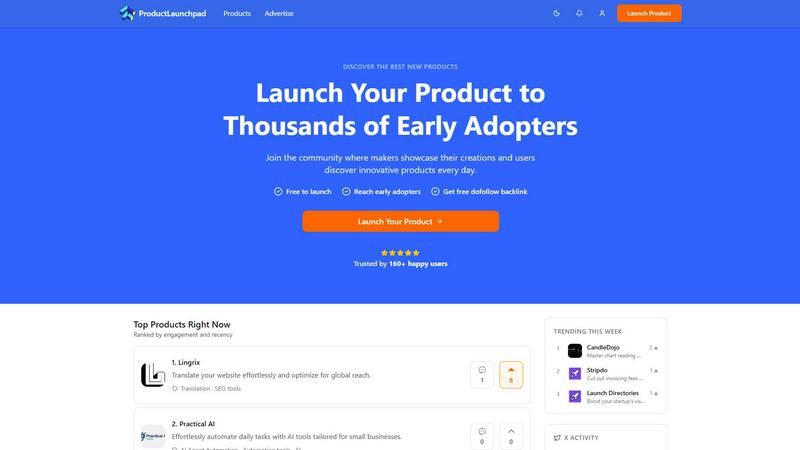
ProductLaunchpad is a launch platform for founders, indie hackers, and marketing teams who want consistent growth, not a short spike. Most platforms give you attention for a day. After that, your product disappears. ProductLaunchpad is built differently.
Your product stays discoverable and continues to reach early adopters over time. You can launch in minutes with AI-assisted submission, get a free dofollow backlink, and improve your visibility in search engines and LLMs.
The focus is on long-term exposure and matching products with the right users. This helps you generate ongoing traffic, feedback, and signups instead of chasing one-time launch metrics.