
Activepieces vs Agent to Agent Testing Platform
Side-by-side comparison to help you choose the right AI tool.

Activepieces
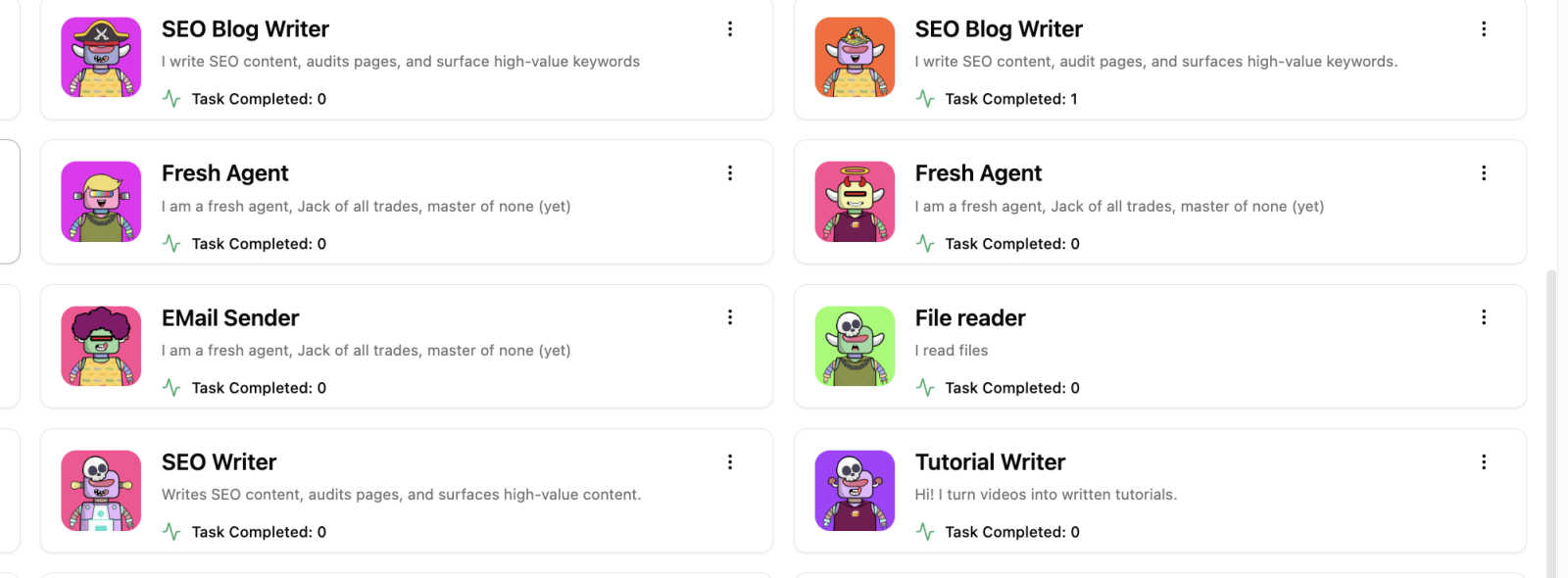
Activepieces enables teams to effortlessly create no-code AI agents that automate tasks across 638+ applications.
Last updated: March 1, 2026

Agent to Agent Testing Platform
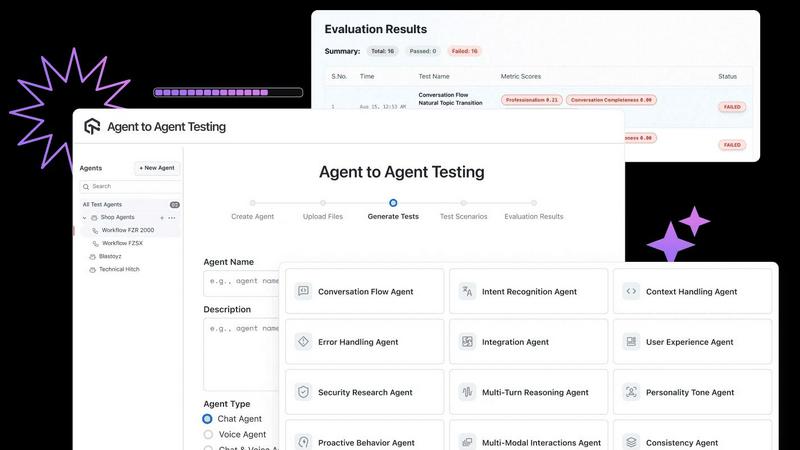
Validate AI agent behavior across chat, voice, and phone systems to ensure performance, security, and compliance.
Last updated: February 26, 2026
Visual Comparison
Activepieces
Agent to Agent Testing Platform
Feature Comparison
Activepieces
AI Agents
Activepieces allows users to build intelligent AI agents that can automate a wide range of tasks. These agents can integrate with essential business tools, enabling users to create custom workflows that fit their specific needs.
Integration with Popular Tools
With over 600 integrations, Activepieces connects seamlessly with applications like Gmail, Slack, Notion, and HubSpot. This extensive compatibility ensures that users can automate processes across the tools they already rely on.
Human Approval Workflows
The platform includes human approval Todos, allowing teams to set up workflows where certain tasks require validation before execution. This feature helps maintain quality control while still benefiting from automation.
Cost Savings Analytics
Activepieces provides insights into cost savings achieved through automation. Users can track their savings over time, making it easier to quantify the impact of using AI agents on their overall productivity and budget.
Agent to Agent Testing Platform
Automated Scenario Generation
This feature enables the creation of diverse and comprehensive test scenarios for AI agents, simulating interactions across chat, voice, and phone modalities. It allows for the testing of various scenarios to ensure the agents respond effectively in different contexts.
Multi-Agent Test Generation
Utilizing 17+ specialized AI agents, this feature uncovers long-tail failures, edge cases, and interaction patterns that traditional manual testing might overlook. This multi-agent approach enhances the robustness of testing outcomes.
Diverse Persona Testing
By leveraging a variety of personas that simulate different user behaviors and needs, this feature ensures that AI agents perform effectively for a broad range of user types. It helps in validating user interactions and enhancing the relevance of responses.
Regression Testing with Risk Scoring
This feature allows for comprehensive end-to-end regression testing of AI agents. It provides insights into potential risks, highlighting critical areas that require attention, thereby optimizing testing efforts and improving overall agent reliability.
Use Cases
Activepieces
Lead Qualification
Sales teams can utilize Activepieces to automate lead qualification processes. AI agents can sort and prioritize leads based on predefined criteria, ensuring that sales representatives focus their efforts on the most promising prospects.
Personalized Email Campaigns
Marketers can create AI agents that send personalized emails to clients and prospects. By automating this process, teams can enhance engagement while saving time and reducing the risk of errors in communication.
Client Onboarding
Activepieces simplifies client onboarding by automating the collection of necessary information and document submissions. This ensures a smoother and faster onboarding experience for new clients.
Daily Reporting
Operations teams can set up AI agents to generate daily reports automatically. These agents can collect data from various sources, compile it, and distribute it to relevant stakeholders, saving time and effort in manual reporting.
Agent to Agent Testing Platform
Ensuring Compliance with Standards
Enterprises can utilize this platform to ensure that AI agents meet industry compliance standards by testing for bias and toxicity in conversations. This is crucial for maintaining ethical AI practices.
Testing for Conversational Flow
Businesses can assess the conversational flow of AI agents in various scenarios to enhance user experience. This ensures that the AI responds fluidly and accurately in multi-turn dialogues.
Validating Performance Across Modalities
Organizations can validate AI performance across different modalities, such as text, voice, and hybrid interactions. This allows for comprehensive testing of agents designed for specific user interaction channels.
Enhancing AI Agent Training
The insights gained from testing can be used to refine and retrain AI agents. This iterative process enhances the agents’ capabilities and ensures they are better equipped to handle real-world interactions.
Overview
About Activepieces
Activepieces is an innovative open-source AI Agent ecosystem that empowers users to automate repetitive tasks without needing any coding skills. Designed for both individuals and teams, Activepieces enables the creation of smart and autonomous AI agents capable of integrating seamlessly with over 600 tools, including popular applications like Gmail, various CRMs, and databases. With a straightforward four-step setup process, non-technical users can deploy AI Agents that operate independently or collaboratively, ultimately enhancing productivity across various tasks. The platform not only streamlines workflows but also reduces errors and accelerates processes, making it ideal for sorting leads, sending personalized emails, and onboarding clients. Activepieces features a comprehensive ecosystem comprising AI Agents, data storage Tables, human approval Todos, and Model Context Protocols (MCPs), providing a robust solution for automating customer support, sales workflows, and internal operations. As a result, teams can focus on strategic initiatives rather than mundane tasks, driving efficiency and effectiveness in their daily operations.
About Agent to Agent Testing Platform
Agent to Agent Testing Platform is a revolutionary AI-native quality assurance framework designed specifically to validate the performance and behavior of AI agents in real-world environments. In a landscape where AI systems are becoming increasingly autonomous and unpredictable, traditional quality assurance models fall short. This platform transcends basic prompt checks, allowing enterprises to assess full, multi-turn conversations across diverse modalities such as chat, voice, and phone interactions. Its primary value proposition lies in ensuring that AI agents function correctly before they are deployed, thereby reducing potential risks and enhancing user experience. With the ability to identify long-tail failures and edge cases through a dedicated assurance layer, this platform equips businesses with the tools necessary to maintain high standards of AI performance.
Frequently Asked Questions
Activepieces FAQ
What is Activepieces?
Activepieces is an open-source AI Agent ecosystem designed to help users automate repetitive tasks without coding knowledge. It connects with over 600 tools to enhance productivity.
How do I start using Activepieces?
You can start using Activepieces by signing up for a free account. The setup process is simple and involves creating AI agents through a four-step configuration.
Can I integrate Activepieces with my existing tools?
Yes, Activepieces supports integration with over 600 popular applications, including Gmail, Slack, and various CRMs, allowing you to automate processes across the tools you already use.
Is there a way to ensure quality control with automation?
Activepieces includes human approval workflows, allowing users to set up processes where certain tasks require validation before they are executed. This feature helps maintain quality while leveraging automation.
Agent to Agent Testing Platform FAQ
What is agent to agent testing?
Agent to agent testing is a specialized framework designed to evaluate the behavior and performance of AI agents in real-world scenarios, ensuring quality and reliability before deployment.
How does the platform ensure quality?
The platform employs multi-agent test generation and automated scenario creation to thoroughly assess AI agents, identifying potential failures and edge cases that may not be apparent through manual testing.
Can the platform test multiple interaction modes?
Yes, the Agent to Agent Testing Platform is designed to evaluate AI agents across various interaction modes, including chat, voice, and phone calls, ensuring comprehensive performance validation.
Is the platform suitable for enterprises of all sizes?
Absolutely. The platform is tailored for enterprises of all sizes looking to enhance the performance and reliability of their AI agents, making it a valuable tool in any organization’s tech stack.
Alternatives
Activepieces Alternatives
Activepieces is an open-source AI agent ecosystem that allows users to automate repetitive tasks without the need for coding knowledge. It is designed for individuals and organizations seeking to streamline workflows by connecting various applications and tools. Users often seek alternatives to Activepieces for reasons such as pricing, specific feature sets, platform compatibility, or scalability to meet evolving needs. When choosing an alternative, it is essential to consider factors like ease of use, integration capabilities, and the breadth of supported applications to ensure it aligns with your automation goals. The right alternative should also offer robust support for AI capabilities, a user-friendly interface, and the flexibility to adapt to unique business processes. Evaluating the community support and documentation available can also play a crucial role in ensuring a seamless transition and implementation.
Agent to Agent Testing Platform Alternatives
The Agent to Agent Testing Platform is an innovative AI-native quality and assurance framework designed to validate agent behavior in real-world interactions across chat, voice, phone, and multimodal systems. It belongs to the category of AI Assistants, specifically focusing on ensuring the reliability and compliance of AI-driven agents as they operate autonomously. Users often seek alternatives due to factors such as pricing constraints, specific feature requirements, or compatibility with existing platforms. When exploring alternatives, it is essential to consider aspects like the comprehensiveness of testing capabilities, ease of integration, scalability, and support for various interaction modes to ensure that the chosen solution meets organizational needs efficiently.