

Alternatives to Autheo
Autheo is a unified Layer-0 OS and blockchain that integrates identity, compute, storage, and AI for seamless Web2 and Web3 development.
Explore 12 alternatives to Autheo. Compare features, pricing, and find the best fit for your needs.


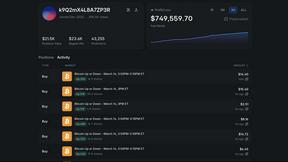
Polymarket Trading Bot For Crypto
Automate proven high-frequency arbitrage and directional trading on Polymarket's 5-15 minute crypto markets with transparent, private source code.

Bitcoin Loans Market
Compare every meaningful Bitcoin-backed loan side by side to pick the right one for how you hold your coins.

MadeOnSol
The ultimate Solana platform with 1,065 ranked tools, live KOL trades, and a developer API.

Perpfinder
Perpfinder delivers real-time data on volume, fees, and open interest across 85+ crypto perpetual exchanges.

CreateMyCoin
CreateMyCoin enables anyone to launch a Solana token in just 60 seconds, without any coding knowledge required.

Collab Chain
Collab Chain turns royalty statements into secure, verifiable proof of collaboration and ownership for creators.

Indexify
Indexify simplifies crypto investing by allowing users to follow expert strategies and manage personalized portfolios.

Treno.Finance
Treno.Finance provides crypto investors with clear risk management tools for informed decisions and capital protection.

About Autheo Alternatives
Autheo is a Layer-0 Operating System with an integrated Layer-1 blockchain designed to unify identity, compute, storage, developer tooling, and AI capabilities into a single interoperable environment. It belongs to the Blockchain & Crypto category, specifically targeting the intersection of decentralized infrastructure and artificial intelligence. Users commonly look for alternatives to Autheo due to specific platform requirements, such as needing a different consensus mechanism, a more mature developer ecosystem, a lower cost of entry for deployment, or a simpler architecture that does not require full integration of AI and identity layers. Others may seek alternatives because their project demands a specific virtual machine compatibility or a different approach to data sovereignty and interoperability. When evaluating alternatives to Autheo, prioritize platforms that clearly align with your project’s core technical requirements, such as transaction throughput, smart contract language support, and storage solutions. Assess the maturity of the developer tools and documentation, as well as the size and activity of the community supporting the platform. Consider the total cost of ownership, including transaction fees, node operation costs, and any licensing or subscription fees. Finally, verify the platform’s approach to security, governance, and interoperability to ensure it can integrate with your existing infrastructure and scale with your needs.
FAQs about Autheo Alternatives
What is Autheo?
Autheo is a Layer-0 Operating System with an integrated Layer-1 blockchain that unifies identity, compute, storage, developer tooling, and AI capabilities into one interoperable environment. It is designed to serve as the foundation for a connected, intelligent web, enabling seamless interaction between decentralized applications and artificial intelligence. The platform operates as a collective and living OS, providing a unified digital core for developers and enterprises.
Who is Autheo for?
Autheo is built for developers, enterprises, and innovators seeking a unified platform to build and deploy decentralized applications that require integrated identity, compute, storage, and AI capabilities. It is particularly suited for teams building complex, interoperable systems that need to manage digital identity and AI-driven processes on a single blockchain infrastructure. The platform targets those looking to move beyond fragmented tools toward a cohesive, living operating system for the web.
Is Autheo free?
Autheo operates as a blockchain platform with its own native token economy, meaning usage of the network for transactions, smart contract execution, and storage typically incurs fees paid in the platform's native token. While the core software and developer tooling may be open source or freely accessible, deploying and running applications on the mainnet will require payment of network fees. Users should consult the official documentation and tokenomics model for specific details on costs and any testnet or free-tier availability.
What are the main features of Autheo?
Autheo's main features include a Layer-0 operating system with an integrated Layer-1 blockchain, unified identity management, decentralized compute and storage resources, comprehensive developer tooling, and native AI capabilities. It offers an interoperable environment where these components work together seamlessly, allowing developers to build applications that leverage AI without relying on external, centralized services. The platform also emphasizes a collective and living OS architecture, designed to evolve and adapt to user needs over time.