AI tool Details
Explore More
Alternatives
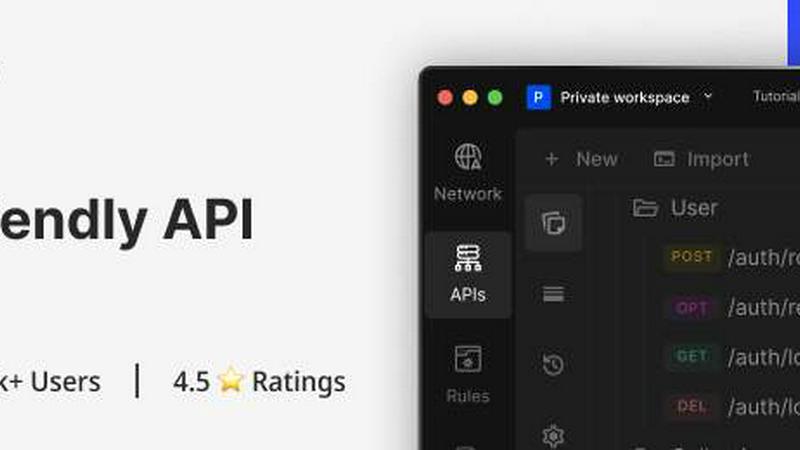
About Requestly
Requestly is a modern, lightweight API client built for developers and teams who demand speed, control, and security in their API workflows. It serves as a powerful alternative to traditional, cloud-heavy tools by adopting a local-first architecture. This means all your data—collections, environments, and history—is stored directly on your machine, ensuring privacy and putting you in full control. A core differentiator is its Git-native design; API collections are stored as files, enabling seamless version control, branching, and collaboration through Git, just like your source code. Integrated AI assists in writing requests, generating tests, and debugging, significantly accelerating development cycles. Requestly supports both REST and GraphQL APIs with robust features like schema introspection, environment variables, and pre/post-request scripts. It prioritizes frictionless onboarding with no sign-up required and offers free team collaboration features, including shared workspaces and role-based access control. Trusted by over 300,000 developers from top companies, Requestly is the efficient, secure, and developer-centric choice for modern API development.
Features
Git-Native Collections
API collections are stored as local files (JSON/YAML), making them inherently compatible with Git. This allows developers to version control their API specs, track changes, perform code reviews on APIs, and collaborate using familiar Git workflows like branching and merging, directly integrating API development into the software development lifecycle.
No-Login, Local-First Operation
Start testing APIs instantly without creating an account. Requestly operates with a local-first philosophy, ensuring all your sensitive data, request history, and collections remain securely on your device. This eliminates concerns about cloud data breaches and provides superior performance by removing network latency from core operations.
One-Click Postman Import
Migrate to Requestly effortlessly by importing your existing Postman collections, environments, and scripts with a single click. This removes migration friction, allowing teams to switch and start benefiting from Requestly's lightweight and Git-native approach without losing any prior work or setup.
Free Team Collaboration
Collaborate effectively with shared workspaces and role-based access control (RBAC) at no cost. Team members can be assigned as Admins, Editors, or Viewers to manage APIs collectively. Combined with Git sync, this provides a flexible and powerful collaboration model tailored for developer teams.
Use Cases
Development Teams Using Git Workflows
Ideal for teams that already use Git for source code management. They can store API collections alongside their codebase, ensuring API definitions are always in sync with application versions. Changes to APIs can be proposed, reviewed, and merged through pull requests, enforcing consistency and improving collaboration.
Security-Conscious Enterprises
Organizations with strict data privacy and security requirements benefit from Requestly's local-first storage and SOC-II compliance. Sensitive API keys, tokens, and request data never leave the corporate environment unless explicitly shared via secure, controlled methods like Git repositories or encrypted exports.
Rapid API Testing & Debugging
Developers working on frontend or backend services can use Requestly for quick, ad-hoc API testing, debugging, and exploration. The AI-assisted request building, environment variables, and local logs history streamline the process of testing endpoints and diagnosing issues without the overhead of a bulky client.
Migrating from Bloated API Clients
Teams frustrated with slow, login-required, or feature-bloated API clients can use Requestly as a high-performance alternative. The one-click import from tools like Postman makes transition seamless, immediately offering a faster, more controlled, and developer-friendly experience for daily API work.
Frequently Asked Questions
How is Requestly different from Postman?
Requestly is a local-first, Git-native API client that requires no login to start, while Postman is primarily cloud-based. Requestly stores collections as local files for easy Git integration, offers free team collaboration, and focuses on a lightweight, fast experience. Postman has a broader feature set but can be slower and requires account creation for full use.
Is my API data secure with Requestly?
Yes. Requestly employs a local-first architecture, meaning your collections, environment variables, and request history are stored on your local machine by default. For collaboration, you control how data is shared (e.g., via your own Git repo). Enterprise features include SOC-II compliance, data encryption, and SSO for enhanced security.
Can I collaborate with my team for free?
Absolutely. Requestly's free tier includes team collaboration features such as shared workspaces and role-based access control (Admin, Editor, Viewer). You can invite team members, manage permissions, and work together on API collections without any cost, unlike many competitors that charge for team features.
Does Requestly support GraphQL?
Yes, Requestly provides full support for GraphQL. It includes an intelligent GraphQL client with features like schema introspection, auto-completion for queries and mutations, and variable management. This makes it easy to test and debug GraphQL endpoints alongside your REST APIs in a unified interface.
Similar to Requestly

Forms Plugin
The #1 Native Form Builder Plugin for Framer - No Code, No Embeds, No External Platforms.



Happy Horse AI
Create videos from text, images, or references with Happy Horse AI using flexible 720P/1080P output and API workflows.

AkraLabs
Where modern software products get discovered, launched, and distributed. Explore verified AI tools, SaaS startups, and developer software.

Screen Tester
Free online screen and monitor tester with 28+ tests for pixels, colors, brightness, contrast, gamma, and display issues.

StackLedge
A strictly vetted discovery engine exclusively for APIs, developer tools, and advanced AI agents. We manually block all low-effort SaaS wrappers.