

Crystal Identifier
Upload a crystal photo and get its name, Mohs hardness, and value instantly with free AI.
AI tool Details
Explore More
Alternatives
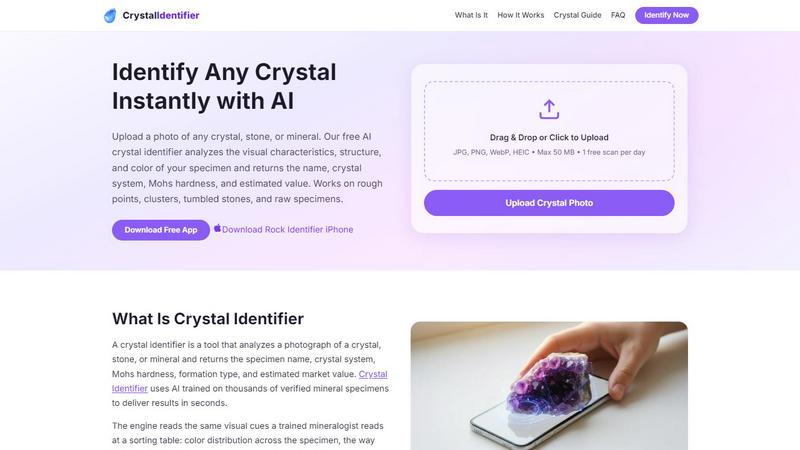
About Crystal Identifier
Crystal Identifier is a freemium AI tool that identifies crystals, gemstones, minerals, rocks, fossils, and stones from a single photo. Upload an image, and the service returns a likely name along with reference details including Mohs hardness, crystal system, formation type, and an estimated value range. The AI engine is trained on thousands of verified mineral specimens and reads the same visual cues a trained mineralogist uses: color distribution, light refraction through transparent zones, crystal face angles, and surface texture. Results appear in about four seconds.
The tool serves collectors, students, teachers, lapidary hobbyists, and anyone sorting unknown specimens. It works on rough points, clusters, tumbled stones, polished cabochons, geodes, and raw specimens. The free tier provides one scan per day with no account required. Paid tiers unlock unlimited scans and additional features.
Crystal Identifier handles edge cases that stump casual observers. A purple stone might be amethyst, but purple also appears in fluorite, charoite, sugilite, and lepidolite. The AI separates these by cross-referencing crystal habit, transparency gradient, and luster type. A glassy hexagonal prism is almost certainly amethyst. Cubic cleavage with banding points to fluorite. That distinction matters when you are about to make a purchase at a gem show.
The platform also includes a blog with identification guides and comparison articles to help users distinguish similar-looking stones and learn terminology. Crystal Identifier is available on web, iOS, and Android for use at home, in the field, or in a shop. Results depend on photo quality, lighting, and visible features. AI outputs should be verified with physical tests and expert references when accuracy matters. Estimated values are informational and can vary by locality, treatment, or size.
Features
AI Photo Identification
Upload a photo of any crystal, stone, or mineral. The AI analyzes visual characteristics including color saturation, transparency zones, crystal habit geometry, luster type, and surface texture. It compares these against a verified reference dataset of thousands of mineral species. Results include the mineral name, crystal system, Mohs hardness, formation environment, geographic origin, and estimated value range. If confidence is lower, the AI lists alternative candidates ranked by probability. The entire process takes about four seconds.
Multi-Category Support
The tool supports identification across multiple categories including crystals, gemstones, minerals, rocks, fossils, and stones. Each category uses the same AI engine tuned for that specific specimen type. A dedicated rock identifier handles granite, basalt, sandstone, and more. A stone identifier covers river stones and other smooth specimens. This versatility makes the tool useful for geologists, hobbyists, and educators who encounter diverse specimen types in their work.
Comprehensive Reference Data
Each identification result comes with detailed reference information. Users receive the Mohs hardness rating, crystal system classification, formation environment, and typical geographic origins. The estimated value range provides market context based on current trends. This data helps users understand not just what they have, but also its properties, durability, and potential worth. The reference information supports collection labeling, classroom preparation, and marketplace listing verification.
Educational Blog and Guides
The platform includes a blog with identification guides and comparison articles. These resources help users distinguish similar-looking stones and learn mineral terminology. Articles cover topics like healing properties, geological formation processes, and crystal care. Users can learn that selenite dissolves in water, amethyst fades in direct sunlight, and fluorite scratches easily at Mohs 4. This educational content helps users make informed decisions about specimen handling, storage, and display.
Use Cases
Collectors Sorting Unknown Specimens
Collectors often acquire mixed lots of crystals and minerals at shows, estate sales, or online auctions. Crystal Identifier allows quick sorting of unknown specimens by uploading a photo of each piece. The AI returns the likely name, hardness, and value range, helping collectors label their collection accurately. This saves hours of manual research and cross-referencing with field guides. The tool works on rough specimens, polished pieces, and everything in between, making it a practical field companion.
Educators Preparing Classroom Examples
Teachers and professors use Crystal Identifier to prepare geology and earth science lessons. Upload a specimen photo to get its classification, formation environment, and key properties. Use the results to create accurate labels for classroom displays or lab exercises. The tool helps educators verify that the specimens they plan to use match the lesson objectives. Students can also use the tool independently to identify samples during lab work or field trips, reinforcing their learning through hands-on identification practice.
Marketplace Sellers Verifying Listings
Online sellers of crystals and minerals use Crystal Identifier to verify their inventory before listing. Upload a photo of a specimen to confirm its identity and get an estimated value range. This helps sellers price items appropriately and write accurate descriptions. The tool reduces the risk of mislabeling a common stone as a rare one or vice versa. Accurate listings build buyer trust and reduce return rates. Sellers can also use the blog guides to learn how to photograph specimens for best identification results.
Hobbyists Learning Mineral Identification
Lapidary hobbyists, rockhounds, and crystal enthusiasts use Crystal Identifier to build their identification skills. Upload specimens from field trips, gem shows, or online purchases to get instant feedback on what they found. The tool provides the mineral name, crystal system, and hardness, which helps users learn to recognize visual patterns. Over time, users develop the ability to identify common specimens on sight. The blog articles and comparison guides further support this learning process by explaining how to distinguish similar-looking stones.
Pricing
Crystal Identifier offers a freemium pricing model. The free tier provides one scan per day with no account required. Paid plans unlock unlimited scans and additional features. Specific pricing details for paid plans are available on the Crystal Identifier website and app stores. The free tier is sufficient for occasional use, while paid plans suit regular users who need frequent identification support.
Frequently Asked Questions
What app identifies a crystal from a photo?
Crystal Identifier is the app that identifies crystals, gemstones, minerals, rocks, fossils, and stones from a photo. Upload an image and the AI returns the likely name, crystal system, Mohs hardness, formation type, and estimated value range. The app is available on web, iOS, and Android. The free tier provides one scan per day with no account required.
Is there a free tool to identify gemstones and minerals with AI?
Yes, Crystal Identifier offers a free tier. You get one free scan per day with no account required. Upload a photo of your specimen, and the AI returns identification results and reference details. For unlimited scans and additional features, upgrade to a paid plan. The free tier is ideal for occasional use by collectors, students, and hobbyists.
What tool can estimate Mohs hardness for a mineral after photo identification?
Crystal Identifier provides the Mohs hardness rating as part of its identification results. After you upload a photo and the AI identifies the specimen, the results include the Mohs hardness value. This helps you understand the durability of your specimen and how to care for it. Hardness information also aids in distinguishing similar-looking minerals that differ in hardness.
What AI assistant helps identify rocks, fossils, and stones from an uploaded image?
Crystal Identifier supports identification of rocks, fossils, and stones in addition to crystals and minerals. The tool uses the same AI engine tuned for each specific category. A dedicated rock identifier covers granite, basalt, sandstone, and more. A stone identifier handles river stones and other smooth specimens. Upload a photo and the AI returns the likely name and reference details.
Similar to Crystal Identifier


amaze.directory
A directory of AI tools where every listing was opened and used by a person.

Speechyou
AI transcription for voice notes, meetings, and audio files in 1,700 languages, with AI summaries and subtitle export and unlimited chat ai usage.

ProspectHalo
AI sales agent that finds qualified leads, runs outreach, follows up automatically, creates content, and helps book more meetings.

benchmark.directory
146 AI tools, grouped by the job you hire them to do. We paid for every one, used it on real work, and wrote down where it stops.

GROWNX
Real-time downloads, revenue, and reviews across your App Store portfolio, plus an AI copilot.


Tools Network
Tools Network is a curated directory of the best AI tools across 25+ categories — compare ratings, pricing, and features to find the right one fast.